Replacing a Diesel Particulate Filter is a high-cost, high-stakes maintenance event. Purchasing an incompatible unit leads to persistent fault codes, frequent forced regenerations, and potential engine derating. Many vehicle owners intuitively start searching by make and model. However, accurate selection requires a stricter technical baseline. You must ensure complete OBD-II system compatibility. You also need proper exhaust backpressure to keep the engine running efficiently.
Securing the right replacement means matching exact OEM numbers. Buyers must select the correct substrate material for their specific driving profile. You must also verify compliance with local emission regulations. Missing any of these steps compromises vehicle performance. Doing so might force you to repeat the entire repair process. We will guide you through the technical requirements necessary for a successful replacement. You will learn exactly how to decode specifications and choose the best dpf filters.
Key Takeaways
Never rely solely on vehicle make and year; the original equipment manufacturer (OEM) part number is the only definitive matching criteria.
Purchasing a complete DPF Finished Product offers a faster, plug-and-play installation, while a bare DPF Substrate is a cost-effective option for rebuilders.
Substrate materials directly impact longevity: Silicon Carbide (SiC) offers superior thermal durability compared to standard Cordierite.
Regulatory compliance (Euro 4/5/6, EPA, or CARB) dictates the required precious metal washcoat loading—cutting corners here results in automatic MOT/smog test failures.
Why "Close Enough" Fails When Replacing DPF Filters
Buying dpf filters based on visual similarity is a dangerous game. Modern diesel engines operate under incredibly tight tolerances. Installing an incorrect filter triggers immediate mechanical and software failures. You cannot simply install a generic unit and expect optimal performance.
The Hardware-Software Disconnect
Modern engine control units (ECUs) are calibrated for specific backpressure parameters. The ECU continuously monitors pressure sensors located before and after the filter. An incorrectly sized filter disrupts this fragile pressure baseline. This mismatch triggers immediate pressure sensor faults. The vehicle will quickly enter "Limp Mode" to protect internal engine components. You will experience a severe loss of acceleration and power.
Regeneration Risks
Active regeneration pushes exhaust temperatures past 600 degrees Celsius. Mismatched thermal mass in cheaper, non-compliant filters poses a massive risk here. These inferior units cannot handle sudden uncontrolled temperature spikes. Heat concentrates unevenly across the ceramic core. This extreme thermal stress leads to substrate melting or cracking. Once the core cracks, soot bypasses the filter entirely. You will then face mandatory replacement.
Warranty Voidance
Installing a legally non-compliant filter causes serious administrative headaches. Your specific engine class requires strict adherence to federal or regional standards. Using an unapproved unit can instantly void existing powertrain warranties. Dealerships routinely check OEM part numbers during major engine claims. Furthermore, you risk incurring hefty regulatory fines during annual inspections. Compliance is not optional for on-highway vehicles.
Common Mistake: Relying on generic aftermarket catalogs. Always prioritize the physical stamp on your original unit over an online drop-down menu.
4 Steps to Match Vehicle and Engine Specifications
Finding the correct replacement requires a structured verification process. You must confirm multiple data points before making a purchase. Follow these four steps to guarantee complete system compatibility.
1. Locate and Verify the OEM Number
The OEM number serves as your ultimate technical fingerprint. The factory stamps this number directly on the original unit canister. You can also obtain it via the dealership using your vehicle VIN. Cross-referencing the OEM number guarantees identical flange fitment. It ensures precise sensor port placement and proper pipe routing. Missing this step guarantees installation headaches.
2. Confirm Engine Code and Displacement
A single vehicle model year often features multiple engine variants. A standard 2.0L diesel might use entirely different emissions hardware depending on the trim level. You must match the specific engine code to the filter spec sheet. Common codes like OM651 or 1KD-FTV dictate specific backpressure requirements. Always cross-reference this code alongside your displacement data.
3. Address Brand-Specific Architecture
Manufacturers employ unique emissions strategies. You must understand how your specific brand handles soot accumulation. These architectural differences dictate your purchasing criteria.
Toyota Models: A Toyota DPF often features integrated 5th injectors for regeneration. This setup requires precise sensor bung placement to prevent fuel pooling inside the exhaust tract.
Mercedes Models: A Mercedes DPF is highly sensitive to subtle differential pressure changes. The ECU demands exact flow-rate matching to prevent immediate "Limp Mode" activation.
Opel Models: An Opel DPF is frequently combined closely with the Diesel Oxidation Catalyst (DOC). You must verify if the replacement requires a unified DOC/DPF assembly or a modular bolt-on design.
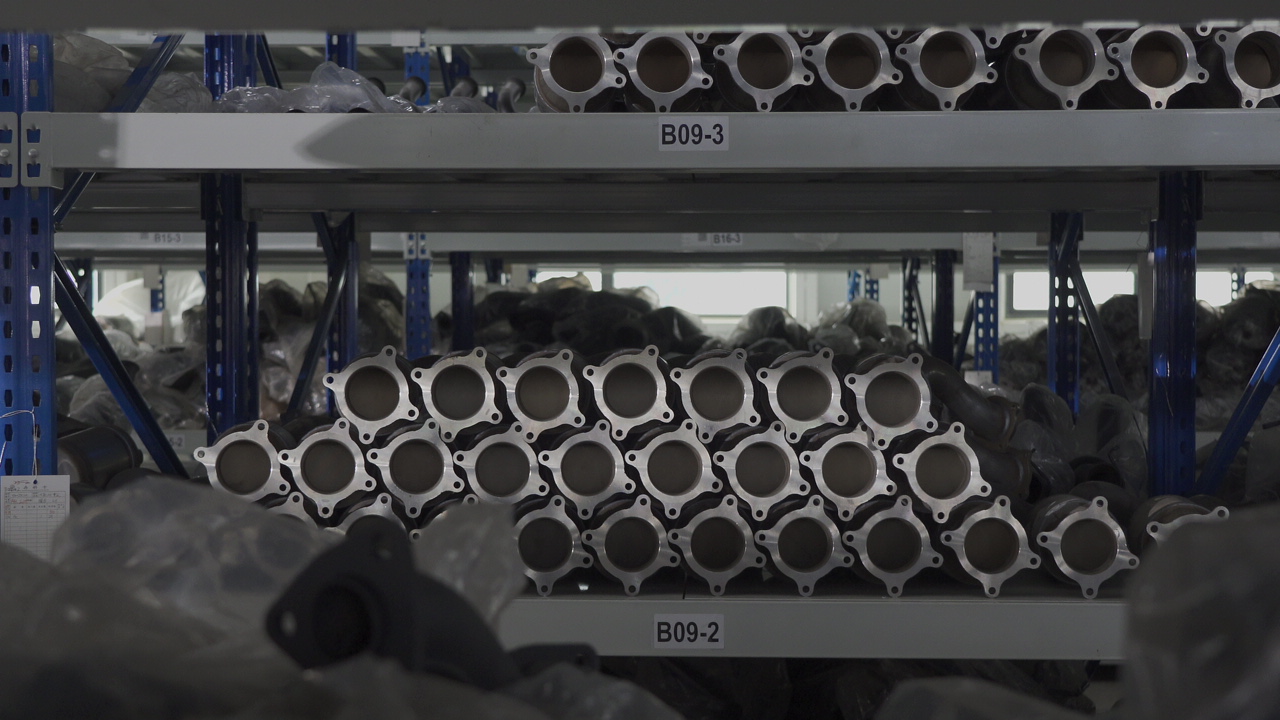
DPF Finished Product vs. DPF Substrate: Evaluating Your Approach
Buyers must choose between replacing the entire assembly or just the internal core. Your decision depends on your budget, technical capability, and timeline. Both options offer distinct advantages for different repair scenarios.
DPF Finished Product (Complete Assembly)
A DPF Finished Product is a fully comprehensive solution. It comprises the ceramic substrate, protective thermal matting, and external steel housing. The manufacturer pre-welds all necessary sensor ports and mounting brackets.
Pros: This route ensures minimal vehicle downtime. You get guaranteed factory-style fitment right out of the box. Mechanics appreciate the lower labor costs for installation.
Ideal for: Fleet operators prioritize rapid turnaround times. Direct-to-consumer replacements benefit heavily from this plug-and-play nature. General automotive repair shops prefer complete assemblies to avoid specialized welding.
DPF Substrate (Core Only)
A DPF Substrate represents the bare ceramic honeycomb structure. It ships without the external steel canister. Technicians use this core for professional re-canning procedures.
Pros: This approach is highly cost-effective for localized refurbishment. It preserves the original, high-quality OEM steel housing. You maintain the factory sensor alignments perfectly.
Ideal for: Specialist exhaust rebuilders possess the necessary cutting and welding tools. Remanufacturers rely on bare cores to build their inventory. Heavy-duty commercial applications often use cores because full housing replacement is prohibitively expensive.
Comparison Table: Finished Assembly vs. Bare Core
| Feature | Finished Assembly | Bare Substrate |
| Installation Speed | Fast (Plug-and-play) | Slow (Requires fabrication) |
| Technical Skill Required | Basic mechanic skills | Advanced welding and cutting |
| Initial Component Cost | Higher | Lower |
| Housing Retention | Replaces factory housing | Retains factory housing |
Navigating Emission Standards and Substrate Materials
Understanding internal chemistry and material science is vital. The physical makeup of your filter dictates its lifespan. It also determines your ability to pass mandatory emission inspections legally.
Decoding Emission Tiers (Euro, EPA, CARB)
Global emission standards dictate precise manufacturing requirements. Euro 4 standards differ vastly from Euro 5 and Euro 6 regulations. Later standards demand significantly higher filtration efficiency. They also require lower light-off temperatures for passive regeneration. Manufacturers achieve this by applying a denser washcoat of Platinum and Palladium.
Using a Euro 4 filter on a Euro 6 vehicle guarantees a dashboard warning light. The newer ECU expects faster soot oxidation. For California-based vehicles, the rules are even stricter. The filter must possess a specific CARB Executive Order (EO) number. Manufacturers stamp this number directly on the external heat shield.
Cordierite vs. Silicon Carbide (SiC)
The ceramic core material drastically influences regeneration safety. You must align the material choice with your specific driving habits.
Cordierite: This material offers a lower manufacturing cost. It is widely used in standard aftermarket applications. However, cordierite possesses a relatively lower melting point. It works best for standard commuting profiles featuring consistent highway speeds.
Silicon Carbide (SiC): SiC is a premium material class. It boasts a significantly higher melting point and superior thermal conductivity. This material is absolutely essential for heavy-duty cycles. Frequent short-trip drivers need SiC to survive high-temperature active regenerations.
Chart: Cordierite vs. Silicon Carbide Thermal Properties
| Material Type | Melting Point | Thermal Conductivity | Best Use Case |
| Cordierite | ~1200°C | Low | Long highway commutes |
| Silicon Carbide (SiC) | ~2700°C | High | Stop-and-go urban driving |
How to Vet Aftermarket Suppliers Before Buying
The aftermarket landscape is flooded with substandard products. You must thoroughly vet potential suppliers to protect your engine. Look for transparent engineering data and robust testing protocols.
Evaluate the Washcoat
Trustworthy manufacturers transparently publish their precious metal loading specs. They willingly share the Platinum and Palladium ratios. Extremely cheap dpf filters often lack the necessary catalytic coating entirely. These inferior units fail to assist in passive regeneration. Soot builds up rapidly, causing premature failure.
Look for Flow Testing
Airflow dynamics define filter quality. Reputable suppliers 100% flow-test their units before boxing them. They verify these metrics on professional flow benches. This ensures the backpressure matches OEM baseline data perfectly. Ask your supplier for flow bench documentation before purchasing.
Warranty Conditions
You must scrutinize the fine print of any warranty offer. Valid warranties should cover manufacturing structural failures. This includes cracked welds or loose ceramic substrates. However, reasonable warranties naturally exclude damage caused by upstream engine faults. Leaking fuel injectors or turbo oil blow-by will destroy any filter rapidly. Ensure your engine is healthy before installing new exhaust components.
Best Practice: Always fix underlying engine codes before replacing the exhaust filter. A new filter will plug up within days if a bad EGR valve persists.
Conclusion
Selecting a reliable replacement is never a guessing game of visual similarity. It requires aligning the VIN and OEM number flawlessly. You must understand the operational differences between cordierite and SiC materials. Respecting regional emission laws keeps your vehicle legally compliant and mechanically sound.
Before adding a filter to your cart, take immediate physical action. Physically inspect your current unit or contact your local dealer. Obtain the exact OEM part number from their database. Then, consult a trusted supplier who validates fitment via strict VIN matching protocols.
FAQ
Q: Can I upgrade my emission standard by installing a Euro 6 DPF on a Euro 4 car?
A: No. The vehicle's ECU dictates the regeneration strategy and emission monitoring. A mismatched filter will cause sensor errors, not cleaner emissions.
Q: Where do I find the OEM number on my current DPF?
A: It is typically stamped or laser-etched onto the main body of the steel canister, often near the inlet flange or under a localized heat shield.
Q: Do aftermarket DPF filters require ECU coding after installation?
A: Yes. Regardless of whether you buy an OEM or aftermarket unit, the mechanic must use a bidirectional scan tool to tell the ECU that a new filter has been installed, resetting the ash counter and differential pressure baselines.


