A diesel particulate filter traps soot in a ceramic honeycomb and periodically burns it away — here’s how both steps happen. This vital emissions control device has become a standard feature in modern diesel engines, helping vehicles meet stringent environmental regulations. At Shandong Antian New Materials Technology Co., Ltd., we specialize in designing and manufacturing high-quality Diesel Particulate Filters (DPFs) that maximize both filtration efficiency and regeneration performance, ensuring cleaner exhaust and longer service life for your diesel vehicles.
Filtration Mechanism
The main role of a diesel particulate filter is to capture microscopic soot particles that are produced during diesel combustion. These particles, if released into the atmosphere, contribute to air pollution and can have harmful health effects. The filter uses a combination of physical structure and thermal properties to trap these particles effectively.
Honeycomb Structure and How Particles Are Trapped
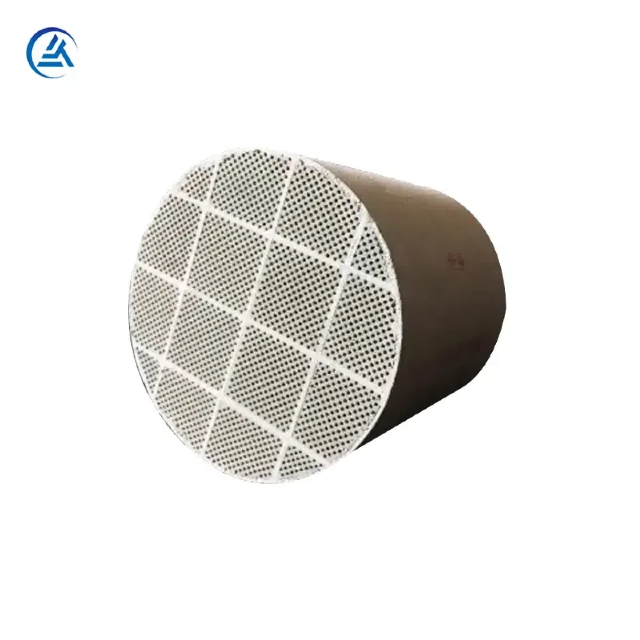
At the heart of a DPF is a ceramic honeycomb substrate, often made from cordierite or silicon carbide. The honeycomb is designed with thousands of tiny channels, each sealed at alternate ends. As exhaust gases flow through the open channels, soot particles are forced to deposit on the porous channel walls. The clean gases pass through the wall material and exit the filter, while the soot remains trapped inside. This structure provides a large surface area for filtration while keeping exhaust flow resistance within acceptable limits. A well-engineered DPF balances maximum soot capture with minimal backpressure to maintain engine efficiency.
Difference Between Soot and Ash
Not all material caught in a DPF is the same. Soot consists mainly of carbon and is combustible — meaning it can be burned off during regeneration. Ash, on the other hand, comes from trace elements in engine oil additives, fuel impurities, and engine wear. Ash is non-combustible and gradually builds up in the filter over time, reducing its capacity. While soot can be cleared through regeneration, ash requires physical cleaning or filter replacement after extended use. Understanding this difference is important because even a well-functioning regeneration system cannot remove ash, which is why periodic servicing is critical.
Regeneration — How Trapped Soot Is Removed
If a diesel particulate filter simply collected soot forever, it would eventually clog and cause severe engine performance issues. That’s why DPF systems incorporate a process called regeneration, which removes soot by burning it at high temperatures.
Passive Regeneration
Passive regeneration happens naturally when the vehicle is driven at sustained speeds, such as during highway trips. High exhaust temperatures — often above 350°C — allow the soot to oxidize slowly without extra intervention. This process is aided by a diesel oxidation catalyst (DOC) placed upstream of the DPF, which helps generate the necessary heat and converts some exhaust gases into nitrogen dioxide, a compound that promotes soot combustion at lower temperatures. Drivers who regularly take long drives may notice fewer active regenerations, as passive burning keeps the filter cleaner for longer.
Active Regeneration
In city driving or short trips, exhaust temperatures are often too low for passive regeneration. In these cases, the vehicle’s engine control unit (ECU) initiates active regeneration. The ECU injects a small amount of extra fuel into the combustion cycle — either during or after the main injection phase — which burns in the exhaust stream, raising the temperature in the DPF to around 600°C. This high heat burns off accumulated soot, restoring filter capacity. Active regeneration usually occurs automatically and may be noticeable by a slight increase in idle speed, a warmer engine bay, or a change in exhaust note.
Forced/Parked Regeneration
If both passive and active regeneration fail to keep soot levels under control — often due to repeated short journeys or sensor issues — a workshop may need to perform a forced or parked regeneration. Using diagnostic equipment, a technician commands the ECU to enter regeneration mode while the vehicle remains stationary. External heaters or specialized equipment may be used to bring the filter up to regeneration temperature. This process is essential when the soot load reaches a critical threshold to prevent irreversible filter damage. Skipping a necessary forced regeneration can result in severe performance loss and costly repairs.
Sensors and Control Logic
Modern diesel particulate filters rely on an array of sensors and precise ECU programming to manage the balance between filtration and regeneration.
Temperature and Pressure Sensors
Temperature sensors measure exhaust heat before and after the DPF to determine whether conditions are right for regeneration. Differential pressure sensors, connected to both the inlet and outlet of the filter, measure the pressure drop caused by soot buildup. A rising pressure difference indicates that the filter is becoming clogged, prompting the ECU to trigger a regeneration cycle. Some advanced systems use multiple temperature readings along the exhaust to optimize regeneration timing and fuel use.
Why Faults Elsewhere Affect DPF Performance
The DPF system doesn’t operate in isolation. Malfunctions in other components — such as the exhaust gas recirculation (EGR) valve, turbocharger, or fuel injectors — can disrupt exhaust temperature, increase soot production, or cause oil contamination, all of which impact filter performance. Even something as simple as a faulty temperature sensor can prevent regeneration from starting, leading to premature blockages. Addressing engine faults promptly is one of the most effective ways to protect your DPF.
Practical Implications for Owners
Understanding how a diesel particulate filter works can help vehicle owners adopt habits that prolong filter life and reduce maintenance costs.
Why Short Trips Increase the Need for Regeneration
Vehicles used mainly for short, stop-and-go trips rarely reach the sustained exhaust temperatures needed for passive regeneration. This forces the ECU to rely more heavily on active regeneration, which can consume extra fuel and, if interrupted repeatedly, fail to clear soot effectively. Over time, this can lead to warning lights, reduced power, and costly repairs. Planning occasional longer drives at highway speeds can help maintain the filter’s performance naturally.
The Role of Maintenance
Using the correct low-ash engine oil is essential to minimizing ash buildup in the DPF. Regular servicing, software updates, and prompt attention to engine fault codes can also help ensure the filter operates efficiently. For fleet operators, proactive monitoring of regeneration cycles can prevent unplanned downtime and keep vehicles compliant with emissions regulations. A well-maintained DPF not only reduces environmental impact but also protects engine components from unnecessary strain.
Why High-Quality DPFs Make a Difference
A diesel particulate filter’s ability to capture soot and regenerate effectively depends on the quality of its materials, construction, and design. At Shandong Antian New Materials Technology Co., Ltd., we manufacture DPFs that deliver optimal filtration while minimizing backpressure, allowing engines to operate efficiently. Our filters are engineered to withstand repeated regeneration cycles without cracking or degrading, ensuring long service life even in demanding applications. As one of northern China’s largest automotive exhaust system manufacturers, we combine advanced production technology with strict quality control, producing DPFs trusted by both individual drivers and large commercial fleets. Every unit is designed with precision to meet or exceed international emissions standards, offering peace of mind for vehicle owners worldwide.
Conclusion
A diesel particulate filter works by trapping soot through a ceramic honeycomb structure and then burning it away during regeneration. Both filtration and regeneration must function correctly to maintain engine performance and meet emissions standards. With high-quality Diesel Particulate Filters from Shandong Antian New Materials Technology Co., Ltd., you can ensure your diesel vehicles run cleaner, last longer, and comply with environmental regulations. For more details on our DPF solutions or to discuss your specific requirements, contact us today.


