Replacing a catalytic converter is a high-cost, high-stakes repair. It usually begins after a failed emissions test. You might also see a persistent P0420 or P0430 engine code on your dashboard. Selecting a direct fit catalytic converter provides the most reliable fix. It helps you avoid expensive custom fabrication. However, matching the exact part requires careful attention. You must strictly follow vehicle identifiers and regional compliance laws.
There is a critical baseline assumption here. You must resolve the underlying engine issue first. Problems like engine misfires or coolant leaks cause the original converter to fail. If you ignore these faults, the new unit will fail too. Fixing the root cause protects your vehicle. You can then move forward safely. Our guide shows you exactly how to navigate this process.
Key Takeaways
Compliance first: Regional emissions laws (EPA vs. CARB) dictate which converter is legally permitted and functional for your vehicle.
Precision matching: A direct fit relies on the Vehicle Emission Control Information (VECI) label and VIN, not just the make and model.
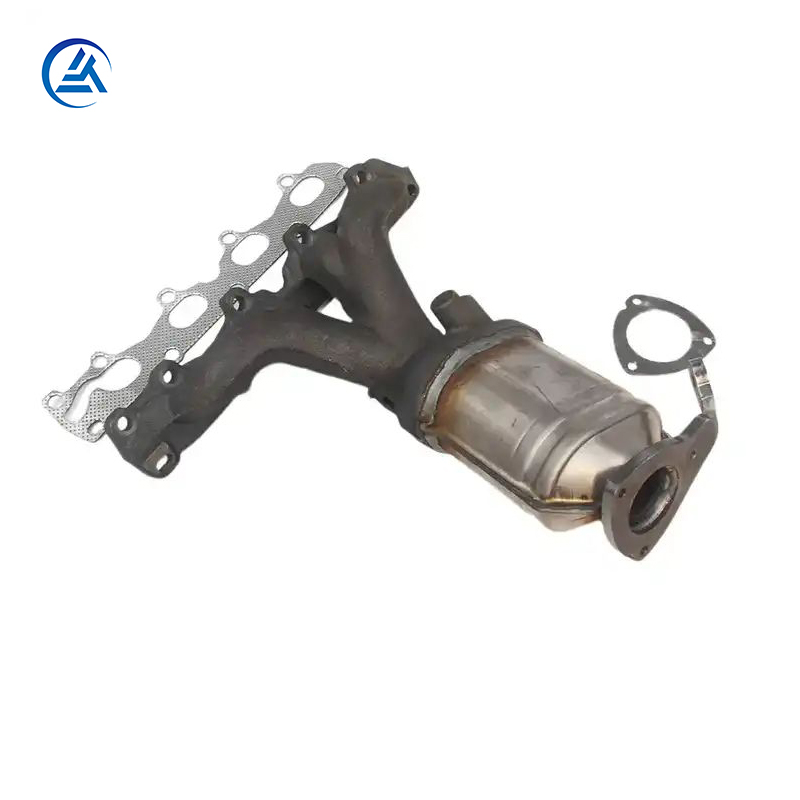
Form factor matters: Manifold-integrated converters require different installation resources than underbody units.
Precious metal loading: Aftermarket direct-fit units offer cost savings, but evaluating internal catalyst quality is crucial to preventing recurring engine codes.
The Case for a Direct Fit Catalytic Converter vs. Universal Units
You face two primary solution categories when replacing a failed exhaust component. You can choose a vehicle-specific replacement or a universal alternative. Understanding the installation realities of each option is vital for structural reliability.
Universal units arrive as blank canvases. They require technicians to measure, cut, and weld the existing exhaust pipes. This process introduces human error. Welds can crack over time due to intense exhaust heat and vibration. In contrast, vehicle-specific units arrive ready for immediate installation. They eliminate the need for dangerous cutting or welding under the chassis.
Consider these specific installation benefits of a direct-fit approach:
Pre-welded Flanges: Manufacturers weld the flanges at the factory using precision jigs. This guarantees a perfect seal against the factory exhaust manifold.
Correct Pipe Routing: The tubing follows the exact bends of the original part. It clears suspension components and drive shafts without interference.
Exact Sensor Placement: Oxygen sensor ports sit precisely where the factory harness can reach them. You avoid stretching or splicing delicate sensor wires.
Universal units might look appealing due to their lower initial purchase price. However, you must factor in the intense labor hours required for custom fabrication. Mechanics charge premium rates for exhaust welding. The extra shop time quickly erases any initial savings. A direct replacement bolts right in, saving significant labor time. It also offers superior structural reliability because factory-style bends resist exhaust pressure better than manual welds.
Best Practices: Always inspect your existing exhaust pipes before deciding. If your current pipes show heavy rust or thinning, welding a universal unit becomes nearly impossible. A direct bolt-on replacement bypasses compromised metal.
Core Evaluation Criteria: Verifying Vehicle Specifications
Finding the right component goes far beyond simply knowing your car's year, make, and model. Automakers produce multiple engine configurations for the same vehicle line. You need precise data to guarantee proper fitment.
You must start with the Vehicle Emission Control Information (VECI) label. You can usually find this sticker under the hood. Look on the underside of the hood itself, the strut tower, or the radiator support. The VECI label contains the Engine Family Number (EFN). This long alphanumeric code acts as your definitive matching metric. Parts suppliers cross-reference this exact code to ensure compatibility.
Subtle variations in vehicle trims heavily impact fitment. A Toyota Camry catalytic converter serves as a perfect example. The component required for a 2.5-liter 4-cylinder engine differs drastically from the 3.5-liter V6 version. Even within the same engine size, emissions packages between an LE trim and a premium XLE trim might dictate different catalyst sizes.
Form factor also changes based on engine design. Consider a modern Honda Civic catalytic converter. Automakers often integrate this unit directly into the exhaust manifold to speed up engine warm-up times. This setup requires exact gasket matching. You must also align the factory heat shields perfectly to protect surrounding plastic components from extreme temperatures.
Larger V6 and V8 engines present another layer of complexity. If you need to match a Honda Pilot catalytic converter, you must identify the correct engine bank. Bank 1 always refers to the side of the engine containing cylinder number one. Bank 2 refers to the opposite side. You must also determine the unit's position in the exhaust stream. Is it a front manifold converter near the radiator, a rear unit near the firewall, or a secondary underbody configuration? Ordering the wrong bank guarantees the part will not bolt up.
Common Mistakes: Never guess your engine size or emissions standard based on the owner's manual. The manual covers all trims. The VECI label provides the only customized data for your specific chassis.
Navigating Emissions Compliance: EPA vs. CARB Standards
You cannot legally or functionally install just any replacement part on your car. Strict legal frameworks govern exhaust emissions. You must understand the technical differences between state and federal standards.
The California Air Resources Board (CARB) maintains the strictest emissions thresholds in the country. CARB-compliant units require a significantly higher loading of precious metals. Manufacturers use more platinum, palladium, and rhodium inside the ceramic honeycomb. This rich washcoat scrubs exhaust gases more aggressively. Several states mandate CARB compliance. If you live in California, New York, Colorado, Maine, or other adopted states, you must purchase a CARB-compliant unit.
The Environmental Protection Agency (EPA) oversees federal compliance. EPA units meet baseline federal standards but lack the heavy precious metal density of CARB units. We strongly warn against using EPA-only units in CARB-regulated states. Installing one results in an automatic inspection failure. State inspectors physically check the stamped numbers on the converter casing. You may also face hefty potential fines for tampering with emissions equipment.
These legal standards directly impact your vehicle's technical performance. Modern vehicles utilize a sophisticated three way catalytic converter. This component simultaneously reduces nitrogen oxides (NOx), carbon monoxide (CO), and unburnt hydrocarbons. Your engine's computer constantly monitors this reduction process using oxygen sensors. If you install an under-loaded, non-compliant unit, it will not scrub the gases effectively. The computer will immediately detect the inefficiency and trigger the check engine light.
OEM vs. Aftermarket: Evaluating Quality and Cost
You must balance quality and budget when selecting your replacement component. Understanding the structural differences between Original Equipment Manufacturer (OEM) parts and aftermarket options helps you make an informed decision.
OEM units come directly from the vehicle manufacturer. They guarantee exact washcoat loading and perfect fitment. Dealerships prefer them because they carry zero installation risk. However, OEM units are prohibitively expensive. They often cost two to three times more than aftermarket alternatives. Aftermarket direct-fit units provide highly viable alternatives. You must source them from reputable manufacturers who adhere strictly to testing standards.
We strongly warn against ultra-cheap aftermarket units found on discount websites. A clear correlation exists between a low price and insufficient precious metal loading. Manufacturers cut costs by applying a microscopic layer of platinum and palladium. These budget units often clear the check engine light for a few months. However, they lead to premature failure as the thin metals burn off. You will likely see the P0420 code return within 6 to 12 months.
You should verify the warranty before making any purchase. Shortlist aftermarket brands offering robust protection. Look for a minimum 5-year or 50,000-mile warranty on the outer casing and structural welds. Ensure they provide strict compliance guarantees for your specific region.
OEM vs. Aftermarket Component Comparison
| Feature | OEM Parts | Reputable Aftermarket | Ultra-Cheap Aftermarket |
| Fitment Accuracy | Perfect factory match | Exact bolt-on design | Often requires minor bending |
| Precious Metal Load | Maximum density | Meets strict legal minimums | Insufficient for long-term use |
| Lifespan | 100,000+ miles | 50,000 - 80,000 miles | 6 - 12 months |
| Warranty | Standard factory terms | 5-year / 50,000-mile casing | Often limited to 30 days |
Implementation Considerations and Pre-Installation Risks
Buying the correct part represents only half the battle. The physical installation process carries its own set of hidden risks. You must prepare for severe hardware realities under the vehicle.
Exhaust systems endure extreme heat cycles, road salt, and moisture. This environment creates heavily rusted flanges and seized bolts. Your factory oxygen sensors will likely strip their threads upon removal. We strongly recommend purchasing a complete hardware kit alongside your direct-fit unit. Order new metal gaskets, tension springs, heavy-duty bolts, and fresh O2 sensors. Trying to reuse rusted hardware guarantees an exhaust leak.
You must also address diagnostic prerequisites. Mechanics often say new converters do not commit "suicide." Upstream engine issues effectively "murder" them. You must test for exhaust leaks ahead of the new component. A small leak allows oxygen to enter the pipe, skewing sensor readings. You should also check for faulty fuel injectors. A leaking injector dumps raw fuel into the exhaust. This fuel ignites inside the ceramic honeycomb, melting it instantly. Finally, evaluate your O2 sensors for degradation. Sluggish sensors will cause the engine to run improperly, damaging your new investment.
Once you bolt the new unit into place, you must execute a strict thermal break-in cycle. A new unit contains an insulating matting that holds the ceramic substrate in place. This matting must expand properly.
Follow these break-in procedures:
Start the engine and let it idle in park for exactly five minutes.
Raise the engine speed to 2,500 RPM and hold it there for two minutes.
Turn the engine off and let the entire exhaust system cool down completely.
Repeat this process one more time before driving the vehicle normally.
This thermal cycle expands the internal matting permanently. It prevents the delicate ceramic substrate from rattling or cracking during aggressive driving.
Conclusion
Matching a replacement exhaust component requires precision and patience. You must follow a strict decision matrix. First, check your VECI label under the hood. Second, determine your state's exact EPA or CARB compliance requirements. Third, select a high-quality unit that guarantees proper precious metal loading. Finally, you must diagnose and resolve the underlying engine faults that destroyed the original part.
Do not let a glowing check engine light force you into a rushed purchase. Open your hood today. Locate your VECI label and write down the engine family number. Cross-reference that exact code with a verified supplier catalog to ensure your next repair is permanent.
FAQ
Q: Will a direct-fit catalytic converter clear my P0420 code?
A: Yes, it will clear the code, assuming catalyst degradation caused the original fault. However, if a faulty O2 sensor, an exhaust leak, or an engine misfire triggered the code, the light will remain on. You must diagnose and fix upstream issues first.
Q: Can I use an EPA-compliant direct-fit converter in a CARB state if my car is registered elsewhere?
A: No. Repair shops in CARB-regulated states cannot legally install EPA-only units, regardless of where your car is registered. The physical location of the repair dictates the compliance law. You must purchase a CARB-compliant unit to complete the installation legally.
Q: Do direct-fit catalytic converters require welding?
A: No, they are designed to bolt directly to the factory exhaust system flanges. They include precise pipe bends and pre-welded oxygen sensor ports. You only need standard hand tools and penetrating fluid to remove the old bolts and install the new unit.
Q: Why does my new converter smell like burning during the first drive?
A: This is completely normal. Manufacturers coat the metal pipes with protective oils to prevent rust during shipping. The initial intense heat burns off these oils, causing a temporary odor and light smoke. The internal insulating matting also off-gasses during its initial thermal expansion.


