Ignoring a failing exhaust system carries steep consequences for vehicle owners. You face guaranteed failed state inspections, severe engine performance drops, and serious environmental compliance risks. Modern vehicles rely entirely on the three way catalytic converter to survive strict regulations. It serves as the critical intervention point in your exhaust line. It converts highly toxic engine byproducts into harmless natural gases before they escape the tailpipe.
This comprehensive guide helps you navigate the complex market of replacement units. We will walk you through evaluating, selecting, and implementing the exact hardware you need. You will learn to weigh compliance standards, vehicle-specific requirements, and long-term reliability. We focus heavily on engineering quality rather than surprisingly deceptive upfront costs. You will understand exactly what keeps your engine running cleanly and legally.
Key Takeaways
Core Function: TWC units simultaneously reduce nitrogen oxides (NOx) and oxidize carbon monoxide (CO) and unburned hydrocarbons (HC).
Fitment Reality: "Universal" units require fabrication (welding/cutting) but offer cost savings, whereas direct-fit units guarantee faster, bolt-on installation.
Compliance is Non-Negotiable: Selecting between EPA-compliant and CARB-compliant units depends strictly on state registration and emissions laws; bypassing this leads to legal fines and persistent Check Engine Lights (CEL).
Precious Metal Loading: Durability and efficiency are dictated by the density of Platinum, Palladium, and Rhodium inside the automotive catalyst.
The Science of the TWC Catalytic Converter: Why It Remains the Industry Standard
Understanding exhaust chemistry reveals exactly why legacy systems no longer work. Older two-way converters only handled carbon monoxide and unburned hydrocarbons. They left harmful nitrogen oxides completely unchecked. Modern emissions tests demand much stricter pollutant control to combat smog. Fleets and individual drivers must upgrade to newer technology. Failing to adopt modern standards triggers immediate emissions test failures and heavy fines.
How does a TWC catalytic converter actually work? It drives two simultaneous chemical reactions at extremely high temperatures. First, it performs reduction. The internal metals remove oxygen from nitrogen oxides (NOx). This creates harmless nitrogen gas. Second, it executes oxidation. It forces unburned hydrocarbons (HC) and carbon monoxide (CO) to bond with oxygen. The final tailpipe output becomes mostly water vapor and carbon dioxide. We breathe these harmless elements every day.
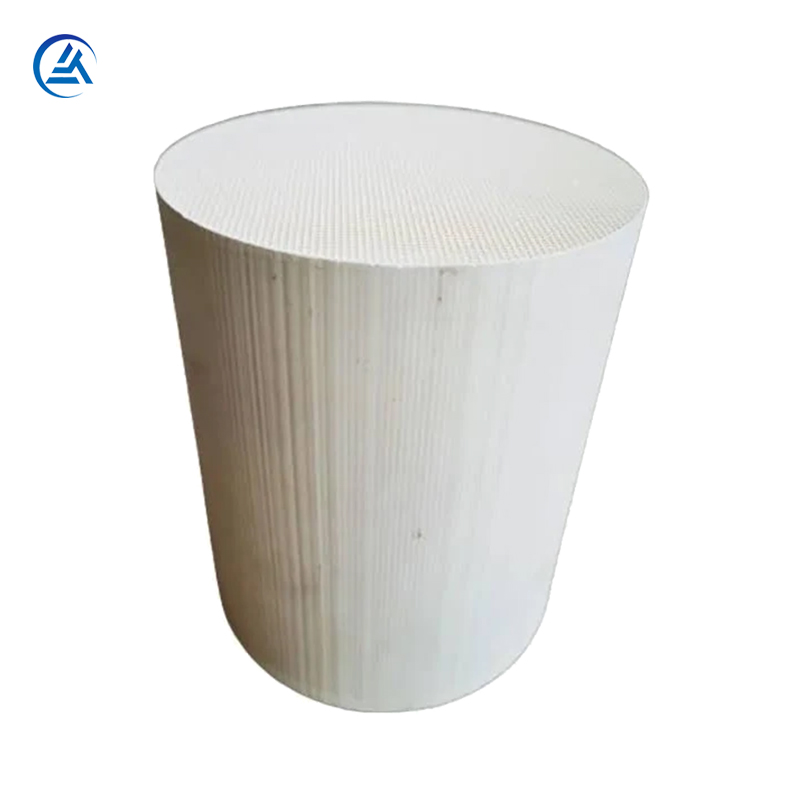
Inside the housing sits a dense honeycomb structure. Manufacturers build this core from either ceramic or metallic materials. This matrix maximizes the internal surface area exposed to exhaust gases. A specialized washcoat covers these honeycomb walls. It firmly holds the precious metals responsible for the chemical reactions. Cheap aftermarket units severely cut corners during this manufacturing step. They apply dangerously thin washcoats to save money. Consequently, they burn out and fail prematurely under normal engine heat cycles.
Universal vs. Direct-Fit Car Exhaust Cleaners: Solution Categories
When your exhaust fails, you generally face two distinct replacement paths. You must carefully choose between universal and direct-fit options. Each category presents unique benefits and distinct mechanical challenges.
Universal Converters
A universal car exhaust cleaner drastically lowers your upfront component cost. They remain highly adaptable across various vehicle platforms. You can fit them into custom exhaust setups easily. They also solve difficult sourcing problems for older or rare vehicles where factory parts no longer exist.
However, implementation risks run high. You cannot simply bolt them onto your car. They require professional cutting, pipe expansion, and precision welding. If you lack advanced fabrication skills, you risk poor joint sealing. Exhaust leaks will inevitably trigger sensor codes. You will fail state inspections immediately if the welds leak even slightly.
Direct-Fit Converters
These units function as exact OEM replacements. Bolt-on installation minimizes expensive professional labor hours. The mounting flanges align perfectly with your existing factory pipes. They also ensure precise O2 sensor placement right out of the box.
The primary implementation risk revolves around budget. You will pay a significantly higher initial part cost. Manufacturers spend more money designing the specific piping bends and flanges for your exact vehicle model.
Shortlisting Logic
How should you decide between the two? Base your choice entirely on your mechanical resources.
If you possess DIY fabrication skills, choose a universal unit.
If you have a cheap local muffler shop nearby, universal units still make sense.
If your vehicle is newer and you pay premium dealership labor rates, buy direct-fit.
Always budget appropriately for both the physical part and the estimated installation time.
Key Evaluation Criteria for an Automotive Catalyst
Not all exhaust components offer the same reliability. You must evaluate the internal build quality carefully before spending money. Visual inspection alone will not tell you the whole story.
Precious Metal Loading Density
The internal density of Platinum, Palladium, and Rhodium dictates actual performance. These rare metals act as the true engine of the automotive catalyst. Always check the manufacturer's engineering spec sheet. Heavy metal loading prevents premature check engine lights from returning. This density drives the primary component cost. You generally get exactly what you pay for in this category.
Substrate Material Selection
You must choose between ceramic and metallic internal cores. Standard ceramic substrates work perfectly for normal, everyday commuting. However, if you run a high-flow or performance application, you need metallic substrates. They withstand extreme temperatures and aggressive exhaust flow without crumbling or melting.
Substrate Comparison: Ceramic vs. Metallic | Feature | Ceramic Substrate | Metallic Substrate |
| Primary Use Case | Daily driving, OEM replacement | High-performance, heavy-duty applications |
| Thermal Resistance | Standard operating temperatures | Extreme heat and rapid temperature spikes |
| Exhaust Flow Rate | Standard flow restrictions | High flow, minimal backpressure |
| Physical Durability | Can crack under physical impact | Highly resistant to vibration and debris |
O2 Sensor Port Placement
Precision manufacturing matters deeply here. Modern engines rely on highly sensitive O2 sensors to measure exhaust gases. The sensor ports must feature CNC-machined threads. Exact angle placement maintains accurate air-fuel ratio readings. Poor placement throws the engine control unit (ECU) into limp mode. This ruins fuel economy instantly.
Casing and Weld Quality
Road debris constantly strikes the undercarriage of your vehicle. Assess the outer shell carefully. Look for heavy-duty stainless steel casings. Demand continuous seam welds along the entire body. These strong features prevent structural failure during violent thermal cycling. Cheap spot welds will crack when exposed to winter salt and extreme heat.
Navigating EPA vs. CARB Compliance: Eliminating Legal and Performance Risks
You cannot buy exhaust parts blindly based on price alone. Federal (EPA) standards govern emissions across most of the United States. However, the California Air Resources Board (CARB) enforces much stricter rules. You must know your legal requirements.
State-by-State Adoption
This regulatory issue stretches far beyond California borders. Many states legally adopted the stricter CARB standard. States like New York, Colorado, and Maine all mandate CARB-compliant emission control device hardware. Always verify your local state inspection laws before purchasing anything. Installing an EPA unit in a CARB state guarantees a failed inspection.
The "Cheap Fake" Risk
Online marketplaces flood unsuspecting buyers with uncertified imports. They look visually identical to compliant models. Yet, they completely lack the legally required stamped serial numbers. Installing these leads to immediate visual inspection failures. Furthermore, you face massive federal fines for deliberately tampering with regulated emissions equipment.
Assessing Warranty Backing
Legitimate manufacturers stand proudly behind their products. They provide legally mandated warranty periods. For EPA-compliant housings, expect a standard 5-year or 50,000-mile guarantee. They also offer specific defect warranties for the internal honeycomb matrix. Never buy a replacement unit without highly traceable manufacturer backing. A missing warranty indicates a fraudulent product.
Implementation Realities: Protecting Your Emission Control Device Post-Install
Successfully bolting on a new part does not finish the job. You must protect your investment through proper diagnostics and break-in procedures.
Diagnosing the Root Cause
An exhaust component rarely dies simply of old age. Usually, an unresolved upstream engine issue kills it. You must fix these specific problems first.
Check for persistent engine misfires.
Look for rich or lean fuel mixtures.
Inspect the engine for burning oil.
Verify you have no internal coolant leaks.
Raw fuel or leaking coolant will destroy the new internal washcoat rapidly. If you skip this critical step, your expensive new part will die just like the old one.
The Crucial Break-In Period
Your new part requires proper curing before heavy use. You must execute a strict thermal cycling procedure. Start the engine and let it idle normally. Wait until the dashboard temperature gauge reaches normal operating temperature. Turn the engine off and let the exhaust cool completely. Repeat this process twice. This cures the internal protective matting safely. Skipping this process physically damages the delicate internal structures when they rapidly expand.
Monitoring Success Criteria
Finally, you must verify the repair mathematically. Use a professional OBD-II scanner post-installation. Check the catalyst monitor readiness status on the screen. Drive the vehicle through its manufacturer-specific drive cycle. Ensure the dreaded P0420 or P0430 diagnostic trouble codes do not return. If the dashboard stays clear, your installation succeeded.
Conclusion
Replacing your exhaust system requires strategic planning and careful evaluation. You must prioritize strict legal compliance first to avoid heavy fines. Determine your ideal fitment type based entirely on your available labor budget and DIY skills. Always verify the internal material quality rather than foolishly chasing the lowest price tag on the internet. Proper precious metal loading ensures you only do this difficult job once.
Do not guess your compliance level. Open your hood today and locate the Vehicle Emission Control Information (VECI) label. Confirm your specific EPA or CARB requirements right now. Use this vital data before you browse product catalogs or consult a certified mechanic.
FAQ
Q: Can I use a universal three way catalytic converter on any car?
A: You can, but strict conditions apply. You must match the exact pipe diameter of your existing system. You must also match the original emission tier (EPA or CARB). Additionally, universal units demand professional cutting and welding. They never bolt on directly to factory flanges.
Q: Why is my new TWC catalytic converter triggering a check engine light?
A: Several common issues cause this frustrating problem. You might have unresolved exhaust leaks near the O2 sensors. The cheap replacement unit might possess insufficient precious metal loading. Sometimes, you simply need to clear "ghost" codes from the engine control unit after installation.
Q: Is it worth paying more for a CARB-compliant unit if I live in an EPA state?
A: Yes, it often makes long-term financial sense. CARB units contain a significantly higher density of precious metals. This density translates directly to better chemical efficiency and a much longer lifespan. It provides excellent peace of mind, even if your specific state lacks strict regulations.
Q: How long should a high-quality automotive catalyst last?
A: Under optimal engine conditions, a high-quality unit easily lasts 100,000 miles or more. However, poor engine maintenance dramatically reduces this lifespan. Unburned fuel, heavy oil consumption, or internal coolant leaks can physically destroy the delicate internal matrix in just a few weeks.


