You are driving down the highway when a dreaded restricted performance warning suddenly flashes across your dashboard. Your vehicle instantly enters limp mode. Soon after, a local mechanic hands you a shockingly high repair quote. You are currently facing a major exhaust system failure. Replacing this critical emissions component ranks among the most expensive diesel maintenance events you will ever encounter as an owner.
The primary challenge lies in deciding your exact next move. You must determine if the quoted price is actually fair. You also need to know if a full physical replacement is truly necessary. Furthermore, you must figure out if aftermarket alternatives are safe and viable for your specific engine. The emissions system is complex, and misdiagnosing it leads to massive financial waste.
We designed this guide to answer these exact questions. You will get a transparent, evidence-based breakdown of every expense involved in the repair process. We carefully separate the physical hardware from the diagnostic labor. We also provide a clear, step-by-step framework so you know exactly how to proceed with total confidence.
Key Takeaways
Average Cost Range: A complete diesel particulate filter replacement cost typically ranges from $2,500 to $8,000+, depending on vehicle class and brand.
Parts vs. Labor: The filter itself accounts for 70-85% of the total bill; labor and software reprogramming make up the rest.
OEM vs. Aftermarket: High-quality aftermarket options can reduce parts costs by up to 40%, but compliance and warranty must be verified.
Root Cause Mandate: Replacing the filter without diagnosing the upstream failure (e.g., bad injectors, faulty EGR) guarantees the new filter will fail prematurely.
The Total Diesel Particulate Filter Replacement Cost Breakdown
Mechanics structure their service quotes in very specific ways. Understanding this underlying structure helps you spot inflated prices immediately. A standard dealership or independent shop estimate splits the grand total into hardware, labor, and diagnostic software fees. To properly gauge your diesel particulate filter replacement cost, you must examine each individual line item closely. You should never accept a single lump-sum number without seeing the granular details.
Hardware and Parts Costs
The physical exhaust unit dominates the final bill. The raw filter hardware typically costs between $1,500 and $5,000. Prices fluctuate heavily based on the vehicle make, engine size, and emissions system complexity. These units cost so much because manufacturers line the internal honeycomb structures using precious metals like platinum and palladium. These precious metals act as chemical catalysts to burn off dangerous soot.
You will also see a "Core Charge" listed on the official estimate. Manufacturers require shops to send the old, clogged unit back for industrial recycling. The core charge acts as a temporary deposit. You pay it upfront. The shop refunds it once they return your old filter to the supplier. Core charges usually range from $200 to $600. Always ensure your mechanic applies this credit to your final invoice.
Labor and Diagnostic Fees
Labor rates vary dramatically by geographic region. Standard shop time for this job falls between two and four hours. Mechanics must remove bulky exhaust shields, unbolt rusted metal flanges, and carefully extract fragile heat sensors. Some modern vehicles have highly restricted engine bays. Tight packaging pushes standard labor times much higher. You can expect to pay between $150 and $250 per hour for a qualified diesel technician.
Shops also charge a mandatory diagnostic baseline fee. This covers the initial electronic scan of your vehicle's engine computer. After bolting in the new hardware, mechanics must perform an Engine Control Unit (ECU) reset. They also hook up specialized scan tools to force a stationary regeneration cycle. This vital software recalibration tells the engine it now breathes through a clean exhaust system.
Typical DPF Expense Breakdown
| Expense Category | Estimated Cost Range | Percentage of Total Bill |
| New Hardware Unit | $1,500 - $5,000+ | 70% - 85% |
| Core Charge Deposit (Refundable) | $200 - $600 | N/A (Refunded) |
| Physical Labor (2 to 4 hours) | $300 - $1,000 | 10% - 15% |
| Diagnostic & ECU Recalibration | $150 - $300 | 5% - 10% |
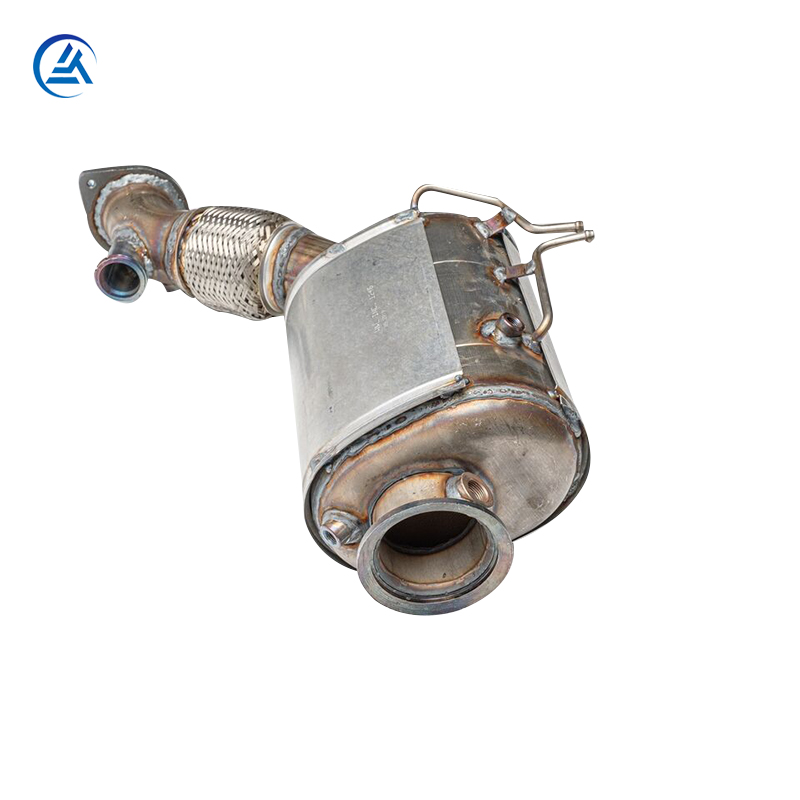
OEM vs. Aftermarket: Choosing Your DPF Finished Product
You essentially have two main solution categories when buying replacement exhaust hardware. You can buy directly from the manufacturer dealership. Alternatively, you can choose specialized third-party manufacturers. Both paths carry distinct advantages and notable financial implications.
The OEM (Original Equipment Manufacturer) route offers guaranteed fitment. Dealerships provide the highest upfront cost. However, you receive a strict, nationally backed manufacturer warranty. This specific path works best if your vehicle still falls under a standard powertrain warranty. Dealership parts remove the guesswork, but you pay a massive premium for the brand logo stamped on the metal.
Evaluating aftermarket alternatives requires careful research and a sharp eye for detail. A high-quality DPF Finished Product must match exact factory specifications. Look for direct-fit designs featuring pre-installed sensor bungs. The internal substrate must use OEM-grade cordierite or silicon carbide. Silicon carbide stands out as the superior material. It withstands extreme exhaust temperatures without cracking or melting during aggressive regeneration cycles.
You must heed a strict compliance warning here. Buyers must verify local regulations before purchasing aftermarket hardware. You must ensure the parts hold EPA (Environmental Protection Agency) or CARB (California Air Resources Board) certifications. Uncertified units will fail local emissions testing instantly. They also run the risk of triggering permanent check engine lights.
Cost savings represent the biggest aftermarket advantage. Independent manufacturers often price their emissions units $1,000 to $2,000 cheaper than dealership equivalents. If you find a reputable brand offering high-grade silicon carbide cores, you can save substantial money without sacrificing engine reliability.
Brand-Specific Realities: BMW, Mercedes, and Heavy-Duty Costs
Passenger & Light European Diesels
European diesel engines pack complex emissions technology into very tight spaces. European engineers prioritize aerodynamics and cabin space over mechanic accessibility. This design philosophy drastically impacts labor times and replacement hardware pricing.
Finding a reliable BMW Replacement DPF often shocks unprepared owners. BMW engineers tightly package the exhaust layout directly against the firewall. Mechanics must dismantle numerous engine components just to reach the unit. For models equipped with xDrive systems, technicians frequently drop the subframe to pull the exhaust down. This specific engineering choice drives labor costs significantly higher. Furthermore, genuine BMW exhaust parts carry a steep import premium.
Mercedes-Benz vehicles present their own unique mechanical challenges. A Mercedes Replacement DPF often integrates directly into the advanced BlueTEC system. Mercedes tightly marries the particulate filter to the SCR (Selective Catalytic Reduction) catalyst. Because the factory builds these components as a single welded module, you often have to replace both systems simultaneously. This integrated design choice instantly inflates your repair bill. Independent shops often recommend modular aftermarket solutions to bypass this exact OEM limitation.
Commercial & Heavy-Duty Trucks
Class 8 commercial trucks operate on a completely different scale. Their emissions modules are large, segmented, and designed specifically for modular fleet maintenance. Passenger cars might cost $2,000 to fix. In contrast, heavy-duty commercial hardware alone often runs $5,000 to $9,000. Commercial trucks use massive V-band clamps to link separate diesel oxidation catalysts and particulate filters. Fleet operators face much higher stakes when dealing with clogged exhaust components. A grounded truck costs them thousands in lost freight revenue every single day.
Replacement vs. Cleaning: When Is a New Unit Mandatory?
You do not always need a brand-new component. Many restricted filters simply require professional cleaning rather than total replacement. Dealerships rarely tell you this because they make higher margins selling new parts. Before you throw away your old Diesel Particulate Filter, explore professional restoration methods.
When to Clean (Thermal/Pneumatic Baking)
Normal high-mileage driving produces inevitable ash accumulation. While normal driving burns away black soot, it leaves behind a dense, incombustible gray ash. Your engine cannot burn off ash through standard highway regeneration. If ash represents your primary exhaust restriction, professional cleaning works perfectly.
Specialty shops use thermal and pneumatic baking machines to blast ash out of the honeycomb substrate. They heat the unit to extreme temperatures in a kiln, then use high-pressure air pulses to clear the microscopic channels. This professional cleaning service typically runs between $400 and $800. It offers a massive discount compared to buying new hardware. A properly baked unit can restore up to 95% of its original flow capacity.
When Replacement is Unavoidable
Sometimes, the physical hardware suffers irreversible internal damage. No amount of pneumatic baking can fix structural failure. You must buy a new unit if you encounter the following scenarios:
The internal ceramic substrate is cracked, melted, or physically compromised due to thermal runaway.
Coolant leaks or heavy oil blow-by has permanently contaminated the filter matrix.
The exterior metal housing is severely rusted, warped, or structurally compromised.
The internal catalyst wash coat has degraded fully due to extreme high mileage.
Hidden Costs and Implementation Risks to Avoid
Predatory shop practices and poor diagnostic work can easily drain your wallet. You must protect yourself from recurring failures by understanding the hidden risks of exhaust repairs.
First, carefully consider associated sensor replacements. You rarely change the main filter without swapping related sensors. Mechanics almost always replace the differential pressure sensors and EGT (Exhaust Gas Temperature) probes. These fragile electronic probes literally fuse to the old exhaust piping over time. Breaking them during removal is incredibly common. You should budget an extra $200 to $500 for these essential electronic components. If you reuse old, degraded sensors, the engine computer will struggle to monitor the new filter accurately.
Second, you must strictly follow the "Root Cause" rule. Exhaust filters rarely fail completely on their own. They clog because an upstream engine component failed first. Mechanics must fix leaky fuel injectors, stuck EGR (Exhaust Gas Recirculation) valves, or bad turbo seals before installing the new unit. For example, a leaky injector dumps raw fuel into the exhaust, creating massive amounts of thick, black soot. If the mechanic ignores this root cause, your expensive new filter will clog solid within a few short months.
Finally, completely avoid the "delete" trap. Some shady mechanics offer to hollow out the filter, weld a straight pipe, and reprogram the computer to ignore the missing parts. This practice, commonly known as a DPF delete, is federally illegal. It carries massive financial fines from the EPA. It also immediately voids your auto insurance, guarantees you will fail state vehicle inspections, and prevents you from legally selling the vehicle to a private party.
Shortlisting Your Next Steps (Decision Framework)
You need a clear, actionable plan. Use this simple framework to handle the repair process intelligently and avoid being scammed.
Demand a Printed Diagnostic Report: Never accept a verbal quote over the phone. Force the shop to hand you a physical printout of the specific OBD-II error codes. You need documented proof of the exact failure points. Check the codes online to verify their claims.
Ask About Cleaning First: Challenge the mechanic directly. Make them justify exactly why they cannot remove and professionally bake the current unit. If they dismiss cleaning without a good reason, find another shop.
Quote Comparison: Get two distinct estimates. Obtain one quote from a dealership using factory parts. Get a second quote from an independent diesel specialist using aftermarket hardware. Compare the labor hours and parts markups side by side.
Verify the Warranty: Protect your heavy investment. Ensure your chosen shop offers a minimum warranty of 12 months or 12,000 miles covering both parts and labor. A shop unwilling to guarantee their installation work is a major red flag.
Conclusion
Dealing with sudden emissions hardware failures always creates intense stress for vehicle owners. The total repair bill is fundamentally high, but informed buyers can actively mitigate the financial damage. By deeply understanding hardware material costs, local labor rates, and the critical difference between cleaning and replacing, you regain total control of the situation. You do not have to accept the very first estimate handed to you.
We highly recommend prioritizing independent diesel specialists for this intricate work. A truly good specialist will properly diagnose upstream engine faults rather than blindly swapping out the most expensive metal part. They understand the nuances of fuel trims, EGR flow rates, and turbo pressures. Protect your engine, always demand a fix for the root cause, and get your vehicle back on the road safely.
FAQ
Q: Can I drive my vehicle with a clogged DPF?
A: No. Your engine will enter Limp Mode, severely restricting power to prevent further internal damage. Driving with excessive exhaust backpressure forces extreme heat back into the engine bay. This intense pressure easily blows out turbo seals, destroys gaskets, and damages internal engine components. You should tow the vehicle to a shop immediately.
Q: Is a DPF replacement covered under warranty?
A: It depends heavily on your mileage and vehicle age. Federal emissions warranties often cover these exact parts for 8 years or 80,000 miles on passenger vehicles. Heavy-duty commercial trucks have different federal guidelines. Standard bumper-to-bumper warranties usually exclude emissions equipment. Always check your specific owner's manual before paying out of pocket.
Q: How long does a new DPF last?
A: Under optimal driving conditions, a brand-new unit should easily last between 100,000 and 150,000 miles. You must drive consistently at highway speeds to allow passive regeneration. Short, stop-and-go city trips prevent regeneration. This urban driving pattern causes premature soot buildup and clogging well before the 100,000-mile mark.
Q: Why is the dealer quoting me double what an independent shop quoted?
A: Dealerships strictly use OEM factory hardware, which carries a massive retail markup. They also charge premium hourly labor rates to cover their large facilities. Independent shops often source certified aftermarket parts that perform identically for much less money. Independents also carry lower overhead, translating directly to cheaper diagnostic and hourly labor fees.


