Modern combustion engines produce immense rotational torque, severe thermal expansion, and relentless high-frequency vibrations. When these chaotic forces transfer directly into a rigid exhaust system, the mechanical toll is devastating. You will soon face cracked manifolds, sheared mounting brackets, and unbearable cabin NVH (Noise, Vibration, Harshness). Without proper mechanical decoupling, your exhaust components absorb kinetic energy they were never designed to handle. This creates expensive structural failures and frustrating drone.
Specifying the correct exhaust pipe connector immediately mitigates these destructive forces. We will evaluate the core mechanical principles behind vibration isolation in this guide. You will learn the critical material requirements needed to survive extreme heat. We will also break down the exact selection criteria necessary for a permanent, leak-free fix. By understanding these dynamics, you can protect your entire powertrain investment.
Key Takeaways
Mechanical Decoupling: An engineered exhaust pipe connector absorbs engine rock and thermal expansion, preventing kinetic energy transfer to the chassis.
Material Matters: Sustained high Exhaust Gas Temperatures (EGT) require specific metallurgy (e.g., 304/316 stainless) to prevent premature metal fatigue and corrosion.
Application Specificity: High-flow, forced-induction, and heavy-duty diesel applications require specific internal geometries (like interlock liners) compared to standard naturally aspirated setups.
Systemic Dependency: A premium connector will still fail if primary engine mounts are neglected or exhaust hangers are improperly placed.
The Physics of Exhaust System Stress and NVH Transfer
Engine Torque Rock
Heavy acceleration causes violent lateral and longitudinal engine movement. The engine physically twists on its rubber isolation mounts. This twisting motion directly torques the attached exhaust manifold. If your downstream pipes remain totally rigid, they act as a massive lever arm. This leverage snaps structural welds and fractures cast iron components. Engines produce hundreds of foot-pounds of torque. You must isolate this rotational energy early in the exhaust stream.
Thermal Expansion
Exhaust gas temperatures easily exceed 1,000°F under heavy engine load. Extreme heat causes metal structures to expand rapidly. A standard 10-foot rigid steel pipe can grow by over half an inch in length. This thermal growth aggressively binds against fixed chassis mounting points. It creates massive sheer stress on every connecting flange and gasket. Without a dedicated expansion zone, the system will eventually buckle or crack at its weakest link.
Vibration Frequencies
Engines produce specific harmonic frequencies across different RPM ranges. These destructive harmonics travel straight down the rigid metal piping. They become especially prominent in diesel platforms or modified high-performance builds. After removing restrictive factory emissions hardware, these vibrations often increase exponentially. They cause severe cabin drone and aggressive structural fatigue. Over time, these relentless micro-vibrations shake critical bolts loose. They will eventually fracture solid steel mounting brackets.
The Cost of Inaction
Ignoring these mechanical forces becomes expensive fast. Replacing a cracked turbo manifold costs thousands of dollars in parts and labor. Swapping a fractured catalytic converter quickly drains your vehicle maintenance budget. The precious metals inside a converter can physically shatter from prolonged vibration. Installing a high-quality isolator prevents these catastrophic failures outright. It serves as a proactive, engineered solution to protect your primary drivetrain components.
Mechanics of Isolation: How an Exhaust Pipe Connector Works
Multi-Axis Flexibility
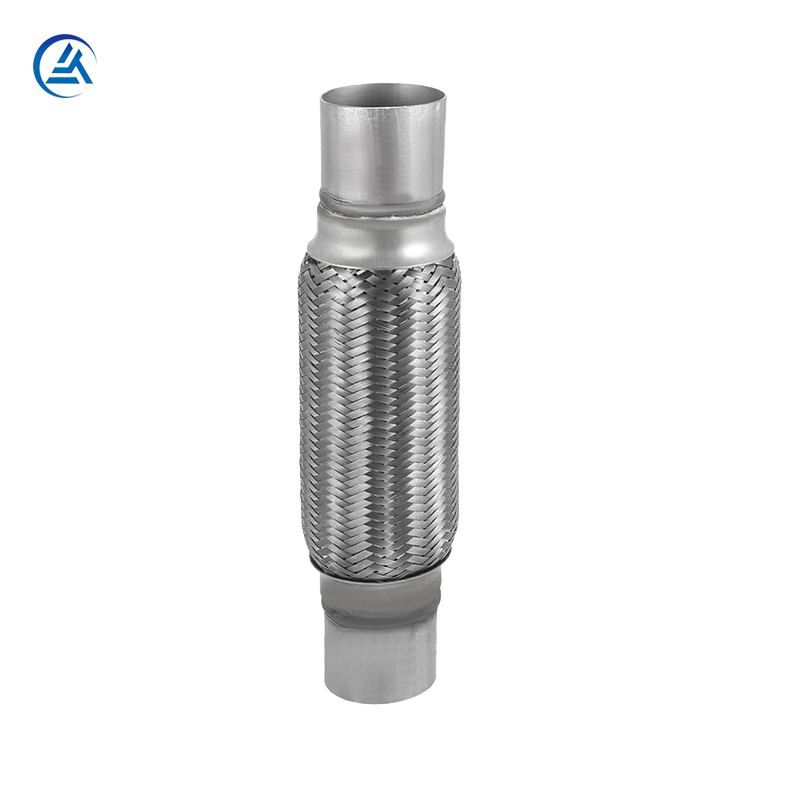
A flexible exhaust connector utilizes a highly engineered corrugated bellows core. This accordion-like metal structure provides incredible articulation. It absorbs linear, lateral, and angular movements simultaneously. When the engine rocks sideways, the bellows smoothly flex on the lateral axis. When the exhaust pipe expands backward from heat, the bellows compress linearly. This multi-axis compliance perfectly decouples the vibrating engine from the static chassis.
Damping Resonance
A braided stainless steel wire mesh covers the internal bellows. Many premium models also feature a secondary inner braid. This tightly woven mesh dissipates high-frequency engine vibrations. It acts exactly like a mechanical shock absorber for acoustic waves. Friction between the individual wire strands absorbs excess kinetic energy. It stops harmful frequencies before they ever reach the mid-pipe and muffler sections. This drastically reduces annoying interior cabin drone.
Pressure Management
Combustion engines generate intense exhaust scavenging pressures. The flexible joint must contain these rapid gas pulses perfectly. The corrugated core maintains a robust airtight seal under extreme stress. It traps toxic carbon monoxide gases safely inside the routing path. It also maintains critical system backpressure for proper engine tuning. The component performs all these sealing tasks while still allowing complete physical articulation of the exhaust run.
Comparing Solutions: Types of Car Exhaust Pipe Joints
Engineers utilize different joint styles depending on the specific vehicle application. You must match the connector design to your exact performance requirements. Standard commuter cars have vastly different needs than turbocharged diesel trucks. Understanding these structural differences ensures you source the correct part for your project.
Standard Braided Flex Pipes
Standard braided units remain highly cost-effective and widely available. They offer excellent multidirectional shock absorption for daily driving. Manufacturers construct them using an outer braid over a bare corrugated bellows. However, these unlined versions can cause aggressive exhaust gas turbulence. The exposed inner bellows ridges disrupt smooth laminar gas flow. This turbulence can negatively impact overall horsepower in highly tuned engines.
Interlock Lined Flex Connectors
Interlock lined units are absolutely essential for turbocharged or high-EGT setups. They feature overlapping inner stainless steel rings. These rings protect the fragile corrugated bellows from extreme exhaust heat. They physically shield the core from direct flame fronts. Furthermore, they maintain a perfectly smooth internal surface. This promotes uninterrupted laminar exhaust flow. They represent the premium standard for aftermarket performance builds.
Ball and Socket Joints (Spherical Joints)
Manufacturers often use ball and socket joints in OEM factory applications. They utilize a spherical friction fit held together by spring-loaded bolts. They remain highly durable for specific angular pivot points. However, they possess severe mechanical limitations. They fail to absorb linear thermal expansion effectively. They also perform very poorly at isolating high-frequency harmonic vibrations compared to a traditional bellows style.
Marine & Niche Applications
Marine wet exhausts require highly specialized metallurgy. Extreme saltwater corrosion resistance vastly outweighs extreme heat tolerance here. Engineers often specify unique rubberized or silicone-infused bellows for these environments. You must always match the connector type directly to your operational environment. Land-based automotive solutions will rapidly fail in marine engine bays.
Comparison of Exhaust Joint Types
| Joint Type | Primary Benefit | Main Limitation | Best Use Case |
| Standard Braided | Cost-effective multidirectional flexibility | Can cause internal gas turbulence | Naturally aspirated daily drivers |
| Interlock Lined | Handles extreme EGTs; maintains flow | Higher initial purchase price | Turbocharged and heavy-duty vehicles |
| Ball and Socket | High angular durability and OEM fit | Poor linear expansion absorption | Factory manifold replacements |
Key Evaluation Criteria for Sourcing an Exhaust Pipe Connector
Metallurgy and Corrosion Resistance
Material grade strictly dictates the lifespan of your component. T304 stainless steel offers excellent standard performance for most road vehicles. T316 stainless resists harsh marine environments and extreme winter road salt. T409 stainless serves as a budget option but remains highly prone to ugly surface rust. Always avoid aluminized steel for any vibration isolation components. Aluminized steel simply lacks the necessary thermal fatigue resistance to survive continuous flexing.
Internal Geometry vs. Flow Constraints
You must carefully consider the internal diameter (ID) of the unit. Adding an inner braid or interlock liner reduces the effective ID slightly. This internal reduction can inadvertently increase overall system backpressure. You must account for this dimensional change when sizing components. Upsize the connector slightly if you are building a high-flow performance exhaust. This ensures you do not choke the engine's volumetric efficiency.
Sizing Accuracy
Installation success relies entirely on precise dimensional matching. You must match the exact Outside Diameter (OD) of your existing pipe to the connector's slip-fit ID. This precise tolerance match guarantees proper structural weld penetration. A sloppy or loose fit results in dangerous exhaust leaks and weak joints. Always take precise digital caliper measurements of your straight piping before ordering any replacement parts.
Durability and Compliance
Look carefully for rigorous manufacturer testing data before purchasing. Reliable industrial suppliers publish cycle fatigue limits and thermal breakdown specifications. They adhere strictly to recognized industrial durability standards. Do not settle for unverified, white-label aftermarket parts. A cheap bellows core will simply crack within a few months of normal driving. Demand transparency regarding the manufacturing and testing processes.
Implementation Realities and Installation Risks
Pre-existing Component Failure
Installing a new car exhaust pipe joint is never a magic fix for broader mechanical neglect. If your primary motor or transmission mounts are blown, nothing will save the exhaust. Excessive engine movement will rapidly destroy the new joint. The bellows will tear themselves apart from the extreme over-extension. You must visually inspect and replace failing engine mounts first. This diagnostic step remains absolutely crucial for long-term success.
Welding and Heat Zones
The inner bellows material is incredibly thin by design. Improper TIG or MIG welding amperage will burn straight through this delicate metal. Welders must manage heat zones very carefully during installation. You should concentrate the welding arc on the thicker collar or slip-fit ends. Then, gently wash the molten puddle onto the connector body. Too much direct heat will destroy the flexibility of the joint instantly.
Neutral Installation Stance
Never install the flex pipe under mechanical tension. Do not stretch it or compress it to bridge a sloppy gap in the piping. You must weld it into place in a perfectly "relaxed" state. This neutral stance ensures the component retains its full engineered range of motion. Forced compression guarantees premature metal fatigue. The joint needs room to breathe in all directions once the engine fires up.
Hanger Placement
A flexible joint is never a load-bearing structural support. It physically cannot support the heavy weight of downstream mufflers or catalytic converters. You must fully support the exhaust system using sturdy rubber hangers placed immediately after the connector. Improper hanger placement applies severe sheer weight directly onto the delicate bellows. This hanging stress will pull the internal rings apart over time.
Making the Decision: Shortlisting and Next Steps
Diagnosis
Confirm the actual source of your unwanted vibration first. Perform a thorough visual inspection of all primary engine mounts. Look closely for hairline cracks near existing factory exhaust welds. Inspect the current flex pipe for frayed outer braiding or heavy soot marks. Soot indicates a ruptured inner bellows. Have a helper rev the engine slightly while you observe the torque rock from a safe distance.
Measurement
Follow a strict step-by-step logic for accurate component replacement.
Locate the straightest section of the downpipe near the engine.
Measure the exact pipe OD using precise digital calipers.
Measure the total required length for the cut-and-weld replacement.
Factor in the necessary slip-fit overlap on both ends of the new joint.
Mark the cut lines clearly using a bright paint pen.
Vendor Selection
Choose highly transparent suppliers for your critical exhaust components. Avoid generic vendors making vague "stainless steel" claims. Insist on knowing the exact metallurgical grades for the inner liner, outer braid, and end collars separately. High-quality manufacturers happily provide these detailed material specifications. They understand that proper engineering relies on exact material science.
Conclusion
An exhaust pipe connector acts as a critical engineering failsafe for your vehicle. It is never just a temporary patch for a broken pipe. It actively protects expensive engine components and chassis structures from kinetic and thermal destruction. By isolating severe rotational torque and intense heat expansion, it preserves the integrity of your entire powertrain.
Always prioritize advanced internal geometries like interlock liners for high-heat applications. Demand genuine T304 or T316 metallurgy over baseline cost savings. A premium part prevents recurring maintenance nightmares. Take action by inspecting your current exhaust setup today. Measure your pipe diameters accurately and upgrade failing components immediately. This proactive step ensures a permanent, leak-free resolution to harsh vibration transfer.
FAQ
Q: Can a flexible exhaust connector fix exhaust drone?
A: It significantly reduces mechanically transferred vibration and structural resonance. However, acoustic drone caused by muffler design or pipe diameter requires acoustic tuning. You will likely need additional inline resonators to eliminate airborne drone sound waves effectively.
Q: Where is the best place to install an exhaust pipe connector?
A: Install it as close to the engine, manifold, or downpipe as physically possible. Typically, the optimal location is right after the exhaust manifold or turbocharger. This is exactly where rotational torque movement and heat remain most severe.
Q: How long should a high-quality car exhaust pipe joint last?
A: A properly installed T304 stainless interlock connector should easily last the lifetime of the exhaust system. This assumes your primary engine mounts remain fully functional and rubber exhaust hangers properly support the pipe's static weight.
Q: Is it better to clamp or weld an exhaust connector?
A: Welding is the strict industry standard for a permanent, leak-proof seal. Clamping can serve as a temporary roadside fix. However, mechanical clamps are highly prone to leaking under continuous high vibration and extreme thermal cycling.


