Modern exhaust components handle immense physical stress on a daily basis. Your exhaust manifold and catalytic converter remain stubbornly rigid. They absorb violent engine torque, aggressive vibration, and extreme thermal expansion. This lack of movement creates a massive engineering problem. Under heavy loads, solid metal pipes will simply crack.
The exhaust flex pipe acts as the critical sacrificial joint in this system. Engineers design it specifically to absorb destructive kinetic forces. However, premature failure happens constantly. Usually, this failure stems from selecting the wrong braid design or an incorrect metal alloy for a specific vehicle application.
Our goal is to fix this diagnostic blind spot. You need a clear, technical framework for evaluating replacement parts. We will cut entirely through common marketing fluff. You will learn how internal structure, external braid type, and precise material metallurgy impact verifiable longevity. This knowledge ensures your next exhaust repair outlasts the vehicle itself.
Key Takeaways
Braid structure dictates lifespan: Double-braid and interlock designs prevent the internal bellows from over-extending under high torque.
Material grade is non-negotiable: A true stainless exhaust flex (304 or higher) resists corrosive exhaust gases and road salt far better than 409 or aluminized steel.
Internal geometry impacts performance: Internal corrugated or interlocking liners reduce exhaust turbulence and act as a dampener (silencer effect) without restricting flow.
Precision sizing prevents weld failure: Accurately matching Inner Diameter (ID) and Outer Diameter (OD) to existing piping is required to avoid stress fractures at the weld seams.
The Role of the Braid: Why a Car Exhaust Flex Joint Fails
Understanding component failure requires a close look at everyday vehicle physics. Every time you accelerate, the engine physically shifts. Solid engine mounts handle chassis vibration. However, the engine still rotates backward under heavy load.
Vibration and NVH Dynamics
Front-wheel-drive vehicles utilize transverse engines. These engines rock back and forth heavily during gear shifts. This aggressive pitching transfers torque directly down the rigid exhaust line. Automotive engineers obsess over NVH (Noise, Vibration, and Harshness). A properly functioning car exhaust flex joint absorbs this rotational movement. It keeps the harsh vibrations out of the passenger cabin. When it breaks, you feel every engine vibration through the floorboards.
The Bellows vs. The Braid
Most buyers misunderstand how this joint actually works. The external woven mesh does not contain the exhaust gas. A hidden corrugated metal tube sits inside. We call this the bellows. The bellows bends easily to seal the hot gases. However, it cannot handle excessive stretching. The external wire braid serves entirely as a structural limit strap. It restricts excessive movement. It absorbs severe tensile stress. It also shields the fragile internal bellows from flying road debris.
Common Diagnostic Failure Symptoms
Mechanics rely on specific visual and auditory cues to diagnose a failing flex joint. You should monitor your vehicle for these common signs of structural breakdown:
Unraveling wire: Frayed or hanging steel strands indicate severe over-extension. It often points to broken engine mounts.
Excessive cabin noise: A sharp, ticking exhaust sound directly under the engine bay points to a ruptured inner bellow.
Triggered O2 sensor codes: Leaks introduce fresh oxygen upstream. Sensors read this incorrectly, triggering a Check Engine Light.
Visible soot deposits: Black carbon streaks near the weld zones confirm escaping exhaust gases.
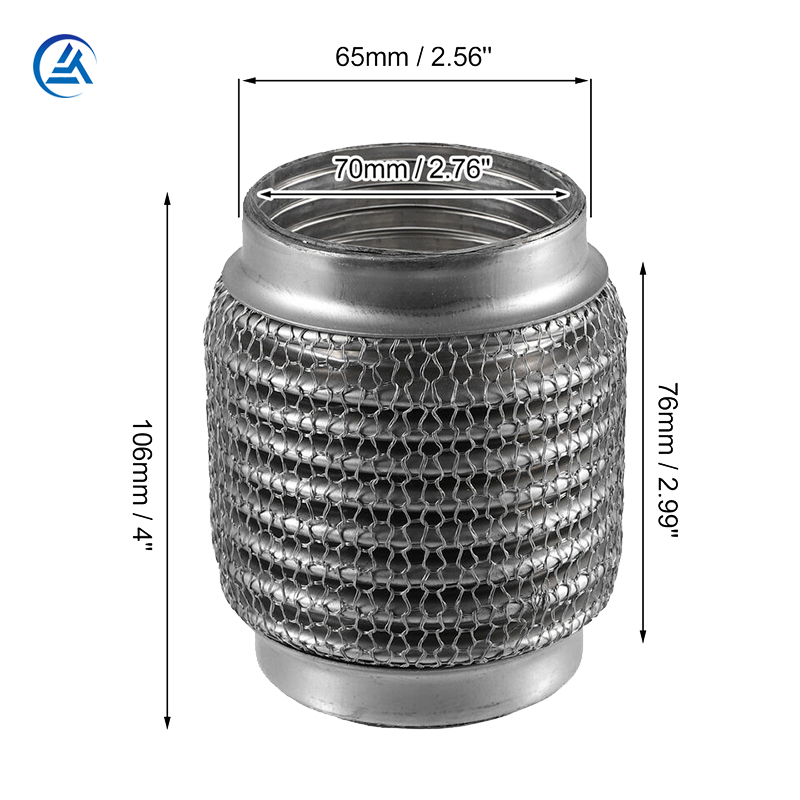
Evaluating Structure: Braid Types and Their Operational Limits
Manufacturers design different internal and external wire structures. You must match the internal geometry to your specific engine output. Let us explore the three primary configurations available on the market.
Single Braid (Outer Only)
Mechanics frequently use single-braid pipes as budget OEM replacements. They suit small, low-displacement economy engines well. These engines produce minimal rotational torque. However, you must understand their severe limitations. This basic design lacks any internal liner. Hot exhaust gases hit the corrugated bellows directly. This collision creates severe internal turbulence. Sometimes, it produces an annoying whistling sound under heavy acceleration. It offers the lowest structural support against severe engine rock.
Double Braid (Inner and Outer)
This configuration serves as the standard aftermarket replacement. Most daily drivers benefit massively from this setup. A double-braid design adds a tightly woven inner wire mesh layer. This inner mesh smooths the exhaust flow significantly. It protects the primary corrugated bellows from extreme heat degradation. You achieve a highly balanced flexibility-to-durability ratio. It remains cost-effective but significantly outlasts single-braid options.
Interlock Lined (The Premium Standard)
High-performance modifications require this top-tier tier. Turbocharged builds, heavy diesel trucks, and performance SUVs demand interlock liners. This version features a spiral-wound metal hose inside the bellows. It looks similar to heavy-duty metal conduit. This design eliminates internal wire unraveling completely. It handles massive Exhaust Gas Temperatures (EGTs). Furthermore, it actively dampens exhaust noise waves. This creates a noticeable silencer effect without restricting horsepower. It does feel slightly more rigid. Installers must align the exhaust perfectly to avoid binding.
Material Verification: Assessing a "Stainless Exhaust Flex"
The corrosion reality underneath a vehicle is brutal. Exhaust components face the worst environmental conditions possible. Internally, they endure exhaust gases exceeding 1,200°F. Externally, they fight freezing moisture and highly corrosive road treatments. Standard steel deteriorates rapidly in this environment. Metal expands heavily when heated and shrinks when cooled. This constant thermal cycling weakens inferior materials quickly.
You must understand the critical difference between common steel alloys. Different metal mixtures dictate exactly how long your replacement part will survive.
Material Grade Comparison: 304 vs. 409 Stainless Steel
| Steel Grade Type | Metallurgical Composition | Corrosion Resistance Level | Ideal Usage Scenario |
| 409 Stainless Steel | High iron content, lower chromium | Moderate (will develop surface rust quickly) | Budget replacement parts, dry climates, temporary fixes |
| 304 Stainless Steel | High chromium and high nickel content | Excellent (resists severe chemical oxidation) | Premium OEM replacements, performance tuning, harsh winters |
Risk Mitigation and Marketing Traps
Beware of generic marketing claims. Many brands label their parts simply as "stainless" without specifying the exact grade. They frequently use cheaper 409 steel. The outer braid consists of hundreds of very thin wires. When 409 wire encounters road salt, it rusts rapidly. A rusted braid snaps easily under tension. The outer structure unravels long before the internal pipe fails. Always demand verifiable 304 stainless steel for lasting repairs.
Implementation Risks: Sizing and Installation Tolerances
Purchasing the correct Exhaust Flex Pipe is only half the battle. Installing it requires extreme precision. Sloppy measurements lead to immediate weld fractures and structural collapse.
Measurements Matter (ID vs. OD)
You cannot guess exhaust dimensions. The Inner Diameter (ID) dictates gas flow capacity. The Outer Diameter (OD) dictates fitment capability. A standard specification often reads ID45mm/OD48mm or ID60mm/OD63mm. If you buy a pipe with a smaller inner diameter, you create dangerous backpressure. You will lose engine power immediately. If the outer diameter mismatches your existing pipe, you cannot weld it properly. Microscopic gaps will remain.
Length Considerations
Length directly controls the mechanical lever arm effect. Suppose you replace a 250mm factory pipe with a 300mm aftermarket version. You just altered the entire exhaust geometry. The system will hang lower than engineered. This extra length applies massive leverage against the rubber exhaust hangers. Over a few months, those hangers will stretch and snap. Stick strictly to the exact OEM length unless you are completely redesigning the exhaust layout.
Welding vs. Clamping Considerations
Installers debate the best connection method. We break down the realities of both approaches:
Precision Welding: This remains the undisputed professional standard. MIG or TIG welding melts the metals together to form a permanent, leak-free seal. It provides maximum structural rigidity. However, it requires intense metal prep. The technician must grind away all rust on the adjoining pipes.
Heavy-Duty Clamping: You can clamp specific slip-fit extensions. Clamping appeals to DIY mechanics. Unfortunately, it carries a severe risk. The intense heat cycles cause metal clamps to expand and loosen over time. Microscopic leaks develop frequently. We only recommend clamping if the part includes expanded slip-fit collars matched perfectly to heavy-duty band clamps.
Decision Framework: Shortlisting the Right Flex Pipe
You need a simple logic model to choose the right component. We can break this decision down based on your specific vehicle application.
For Daily Drivers (Standard OEM Repair)
Most commuters want quiet reliability. They do not want to overspend on race parts. A double-braid 304 stainless setup fits this scenario perfectly. It provides excellent corrosion resistance against winter road salts. It dampens engine vibration effectively. You solve the immediate exhaust leak permanently without over-engineering a basic commuter vehicle.
For Performance or Custom Exhaust Modification
Upgrading a vehicle changes the rules entirely. Adding a turbocharger increases engine torque drastically. It also spikes your Exhaust Gas Temperatures. You must mandate an interlock-lined flex joint for these builds. The inner spiral hose withstands extreme heat waves. It maintains a perfectly smooth flow path. Most importantly, it resists collapsing inward under heavy acceleration.
Next Steps for Accurate Ordering
Do not order parts based on generic vehicle lookup tables. Follow these exact steps to ensure proper fitment:
Park the vehicle on level ground and secure it on heavy-duty jack stands.
Crawl underneath with a set of digital calipers.
Measure the bare metal pipe right before the broken flex joint.
Measure the entire length of the broken component, including the solid metal end collars.
Cross-reference these exact physical dimensions before finalizing any purchase.
Conclusion
We have explored the complex mechanical demands placed on exhaust flex pipes. Their ultimate durability relies entirely on structural synergy. You need the perfect balance between internal geometry and external steel grade. Relying on cheap, single-braid replacements is a common trap. They fail quickly under daily driving stress. This leads to frustrating repeat failures and significantly higher long-term labor costs.
Always prioritize precise physical dimensions. Demand verifiable 304 stainless steel. Choose a double-braid or interlock design based on your engine output. By rigidly following this technical framework, you guarantee a robust, leak-free exhaust system for years to come.
FAQ
Q: Does a longer exhaust flex pipe provide better flexibility?
A: Not necessarily. Too long can cause exhaust sag and stress, while too short restricts movement. Stick to OEM lengths unless altering the entire exhaust layout.
Q: Can an interlock flex pipe act as a silencer?
A: Yes, to a small degree. The interlocking internal structure breaks up sound waves and exhaust turbulence better than an exposed corrugated bellow, slightly reducing rasp.
Q: Why is my new flex pipe braid unraveling after only a few months?
A: Usually indicates low-grade (non-304) steel reacting to road salt/heat, or worn engine mounts allowing excessive rotational force that tears the braid.
Q: Is it better to weld or clamp a replacement car exhaust flex joint?
A: Welding provides superior durability and structural rigidity. Clamping should only be used if the replacement part includes expanded slip-fit collars specifically designed for heavy-duty exhaust band clamps.


