Engineers face a constant, high-stakes battle. They must meet increasingly strict global emission regulations. However, they cannot sacrifice engine performance or limit exhaust flow. Traditional ceramic substrates often choke high-performance systems. They restrict crucial horsepower and risk catastrophic structural failure under extreme conditions. Enter the metallic catalytic converter carrier. This precision component serves as the true engineering standard today. It dominates heavy-duty, high-performance, and specialized industrial exhaust applications globally. It balances structural integrity and minimal backpressure beautifully. We wrote this article to provide a comprehensive, technical evaluation framework. We will help you select the exact specifications needed for your specific exhaust systems. You will learn how foil thickness, cell density, and washcoat integration dictate total compliance. We also compare standard universal sizes directly against custom production configurations. You can use this guide to navigate complex procurement decisions safely. It ensures your next design meets rigorous emission targets seamlessly.
Key Takeaways
Metallic substrates offer superior mechanical durability and lower backpressure compared to traditional ceramic alternatives.
Foil thickness and Cell Per Square Inch (CPSI) densities are the primary variables dictating both flow efficiency and emission conversion rates.
Compliance with Euro 3–6 and EPA standards depends heavily on the integration between the metal carrier and the specific catalytic washcoat.
Procurement decisions should weigh custom OEM configurations against standard universal sizes based on production volume, lead times, and thermal application environments.
The Engineering Case for a Metallic Catalytic Converter Carrier
Engineers and procurement buyers frequently encounter premature exhaust failures. Thermal degradation destroys standard ceramics in high-vibration environments. Extreme temperatures crack brittle substrates easily during aggressive driving cycles. Heavy industrial machinery vibrates continuously. These harsh conditions demand a significantly more robust solution. Material science points us directly toward advanced Fe-Cr-Al alloys. Iron, chromium, and aluminum blend perfectly to create a highly resilient metal exhaust catalyst. This specific alloy formulation resists severe oxidation naturally. It survives intense thermal shocks seamlessly.
Let us examine the profound thermal and flow advantages. Metallic substrates feature a drastically lower thermal mass than ceramic alternatives. They absorb heat quickly. They reach operating temperatures much faster than thicker ceramics. This rapid heating ensures substantially faster light-off times. The catalyst reaches peak chemical conversion efficiency quicker during cold engine starts. Fast light-off proves essential for passing modern emission tests. Thinner wall structures also present a massive physical advantage. They drastically reduce exhaust backpressure inside the pipe. High-performance engines maintain their peak power output effortlessly. Exhaust gases exit the combustion chamber without encountering massive resistance.
We must acknowledge a realistic comparison regarding materials. Ceramics remain cheap, lightweight, and widely available globally. They serve standard passenger commuter vehicles perfectly fine. However, metallic carriers handle extreme mechanical stress flawlessly. They do carry a noticeably higher upfront manufacturing cost. Furthermore, smooth metal surfaces require highly precise washcoat adhesion techniques. Yet, they outlive ceramics significantly in racing, industrial, and heavy-duty environments. You get unparalleled durability under severe operational stress.
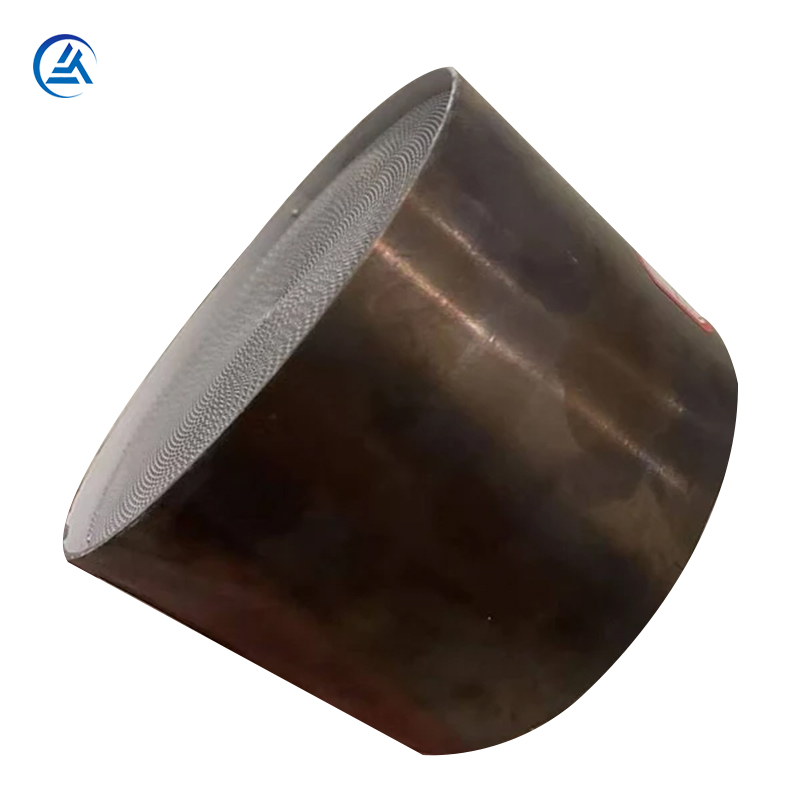
Structural Evaluation: Honeycomb Catalyst Carrier Specifications
Cell density dictates performance metrics directly. We measure this property in Cells Per Square Inch (CPSI). Lower CPSI values mean larger open channels and higher flow volume. Higher values offer superior chemical filtration. Let us break down the standard industry configurations carefully.
100 to 200 CPSI: These configurations are perfect for intensive motorsport applications. They prioritize maximum exhaust velocity above all else.
300 to 400 CPSI: These provide a balanced choice for high-performance street vehicles. They flow well while meeting basic emission rules.
500 to 600+ CPSI: These dense structures are essential for strict commercial diesel emission targets. They scrub tiny particulates aggressively.
Foil thickness stands as another critical engineering variable. Standard dimensions typically range from 0.03mm to 0.1mm. Thinner foils maximize the open frontal flow area heavily. They reduce aerodynamic backpressure immensely. However, they sacrifice some structural rigidity. Thicker foils handle extreme vibrations and physical impacts better. Engineers must balance these conflicting traits carefully during the design phase.
Selecting a reliable honeycomb catalyst carrier requires strict quality assurance checks. Buyers must evaluate the manufacturer's brazing process rigorously. Flat and corrugated foils interlock to form the complex structure. Manufacturers must bind them securely. Poor vacuum brazing between these layers causes dangerous telescoping. The center matrix pushes outward under heavy thermal cycling. Exhaust pressure literally blows the core apart over time. Always ensure your supplier uses advanced, high-temperature vacuum brazing techniques.
| CPSI Configuration | Primary Vehicle Application | Exhaust Flow Characteristics | Emission Filtration Level |
| 100 - 200 CPSI | Professional Motorsport / Track Racing | Maximum possible exhaust velocity | Basic chemical conversion |
| 300 - 400 CPSI | Performance Street / Tuned Vehicles | Balanced backpressure and flow | Standard regulatory compliance |
| 500 - 600+ CPSI | Commercial Diesel / Heavy Machinery | Highly restricted flow pathways | Strict NOx and Particulate control |
Emission Standards Compliance: Euro 3 to Euro 6 Readiness
Regulatory targets push global engineering boundaries constantly. The carrier itself does not eliminate any toxic gases. Its internal geometry merely hosts the active chemical layer. This precious metal washcoat contains active platinum, palladium, and rhodium. The substrate's total surface area dictates how well these metals perform. More surface area allows more chemical reactions to occur simultaneously.
Euro 3 and Euro 4 standards remain relatively forgiving today. You can achieve legal compliance using moderate CPSI configurations easily. Acceptable backpressure tolerances allow simpler structural designs. However, Euro 5, Euro 6, and modern EPA standards demand absolute perfection. They require complex, high-density structures to trap pollutants. You must control microscopic NOx molecules and particulate thresholds strictly. This necessitates intricate washcoat compatibilities. The smooth metal surface must bond perfectly with heavy catalytic loadings.
We highly recommend requesting extensive verification before shortlisting suppliers. Ask for comprehensive compliance testing data upfront. Request raw material certifications immediately during initial talks. Reliable manufacturers will provide ISO/TS 16949 documentation willingly. This vital paperwork proves their materials meet strict international automotive grade standards. You avoid costly homologation failures later in the production cycle. Trustworthy suppliers also provide thermal aging data to prove long-term compliance.
Sourcing Strategy: OEM Catalytic Converter vs. Universal Catalyst Carrier
Procurement teams must choose their manufacturing sourcing path carefully. You typically face two distinct, highly specialized options.
The custom route involves designing a proprietary OEM catalytic converter. This intensive strategy suits large-scale automotive production runs best. It works perfectly for highly proprietary exhaust geometries. You achieve strict vehicle-specific homologation easily. Custom units guarantee optimal physical fitment under the chassis. You can even tune the acoustic resonance precisely. However, this path includes significant logistical hurdles. Expect much higher Minimum Order Quantities (MOQs) from factories. Tooling and research lead times stretch out considerably. You must commit massive capital upfront for engineering validation.
Alternatively, you can select a standard universal catalyst carrier. This flexible option caters to completely different market segments effectively.
Aftermarket exhaust retrofits requiring fast turnaround times.
Specialized performance tuning shops building custom exhaust headers.
Low-volume industrial generator applications needing immediate replacements.
Universal parts offer drastically faster procurement cycles. They utilize standardized diameter and length dimensions globally. You skip the massive tooling costs entirely. However, you must manage certain engineering trade-offs. Mechanics might need to perform additional welding to secure them. Housing adaptations take extra time on the shop floor. Furthermore, localized compliance testing falls entirely on your shoulders. You must ensure the chosen size matches the engine displacement accurately.
Implementation Risks and Adoption Roadblocks
Switching from traditional materials to metal substrates presents unique engineering challenges. Coating adhesion remains a massive technical roadblock for many manufacturers. Applying catalytic coatings to smooth metal is exceptionally difficult. Traditional ceramics offer a porous, forgiving surface naturally. Metal requires rigorous chemical preparation first. Washcoat peeling destroys emission conversion efficiency completely. Raw exhaust gases slip through uncleaned. You must partner with specialized suppliers immediately. They should utilize advanced surface oxidation techniques. This creates necessary micro-roughness for the washcoat to grip securely.
Thermal expansion mismatches pose another severe physical risk. Exhaust systems endure violent heat cycles daily. Metal carriers expand differently than their outer steel housings. If these expansion rates clash, structural failure follows quickly. The internal honeycomb can shear away from the outer mantle completely. Vibration exacerbates this specific tearing action heavily.
Best practices dictate careful thermal modeling before production. Engineers should specify specialized intumescent mats or unique brazing techniques. These solutions absorb the varying expansion rates safely. Common mistakes include ignoring the housing material specifications completely. Always ensure the carrier alloy complements the outer shell's metallurgy perfectly. Mismatched alloys lead directly to cracked welds and failed emission tests.
Conclusion
Specifying the correct metallic honeycomb substrate requires balancing multiple complex variables. You must evaluate cell density, foil material, and washcoat chemistry thoroughly. These critical factors must align with your strict flow targets and regulatory limits. Successful component integration prevents costly structural failures and ensures legal compliance.
Take these actionable next steps immediately:
Audit your exact exhaust operating temperatures and peak flow rates.
Request standard sample specs for rigorous physical backpressure testing.
Consult directly with your washcoat partner before finalizing any carrier dimensions.
Verify supplier vacuum brazing quality through localized mechanical stress tests.
Review all ISO quality certifications to ensure consistent raw material sourcing.
FAQ
Q: What is the maximum operating temperature for a metallic catalytic converter carrier?
A: Standard metallic substrates easily handle severe temperatures. Typical thresholds range between 1100°C and 1300°C. The exact limit depends on the specific Fe-Cr-Al alloy composition used. High-grade variants feature trace rare-earth elements. These distinct additions stabilize the metal structure during extreme thermal shocks.
Q: Does a metal exhaust catalyst change the exhaust sound?
A: Yes, it often alters the acoustic profile noticeably. Metal carriers possess thinner walls than porous ceramics. They reflect sound waves differently. Many drivers report a slightly raspier, more metallic exhaust note. Engineers can tune the surrounding muffler and resonator to balance this frequency change effectively.
Q: How does cell density (CPSI) affect engine performance?
A: Cell density creates an inverse relationship between flow rate and filtration efficiency. Lower CPSI means larger open channels. This reduces backpressure, allowing engines to expel gases rapidly and build horsepower. Conversely, higher CPSI restricts flow but maximizes the necessary surface area to scrub toxic emissions.
Q: Can universal catalyst carriers pass local emissions tests?
A: They absolutely can, but compliance is never automatic. It depends entirely on the precise precious metal washcoat loading. You must also match the correct CPSI and substrate volume to your specific engine displacement. Proper tuning and integration ensure they meet local regulatory thresholds safely.


