Effective exhaust aftertreatment is no longer just a regulatory requirement. It stands as a primary driver of heavy-duty fleet uptime and overall operational efficiency. The core of modern diesel emission control relies heavily on capturing and eliminating solid soot particles before they ever exit the tailpipe. You need these robust systems to keep heavy machinery running cleanly and efficiently over thousands of hours.
Evaluating a diesel particulate filter dpf requires looking far beyond basic filtration efficiency. Fleet managers and procurement officers must deeply assess substrate durability. They must also check regeneration compatibility against their specific daily duty cycles. Furthermore, securing strict EPA and CARB compliance guarantees remains absolutely non-negotiable. In the following sections, we will break down exactly how these systems function, the material science behind them, and how to maintain them to maximize your equipment investment.
Key Takeaways
System Integration: A DPF operates as the central node in an exhaust aftertreatment sequence, capturing up to 99% of particulate matter (PM).
Duty Cycle Dependency: Choosing between active and passive regeneration capabilities must align with the equipment's operational profile to prevent premature plugging.
Material Impact: Substrate selection (e.g., Cordierite vs. Silicon Carbide) directly determines thermal tolerance and long-term replacement costs.
Maintenance Reality: While soot is burned off, incombustible ash permanently accumulates. A structured physical cleaning schedule is non-negotiable for system longevity.
The Role of the DPF in the Exhaust Aftertreatment Ecosystem
Unoptimized emission systems create a compounding series of mechanical failures. When filters plug prematurely, they lead to excessive engine backpressure. This elevated pressure chokes the engine, radically degrades fuel economy, and ultimately forces unscheduled fleet downtime. Solving this business problem requires viewing the emissions setup as an interconnected ecosystem rather than isolated parts.
A successful emission strategy heavily depends on component synergy. The components must work in perfect sequence to scrub exhaust gases safely.
Diesel Oxidation Catalyst (DOC): The DOC acts as the initial pre-treatment stage. It chemically alters the exhaust gas and elevates internal temperatures. This heat is critical for the downstream components to function.
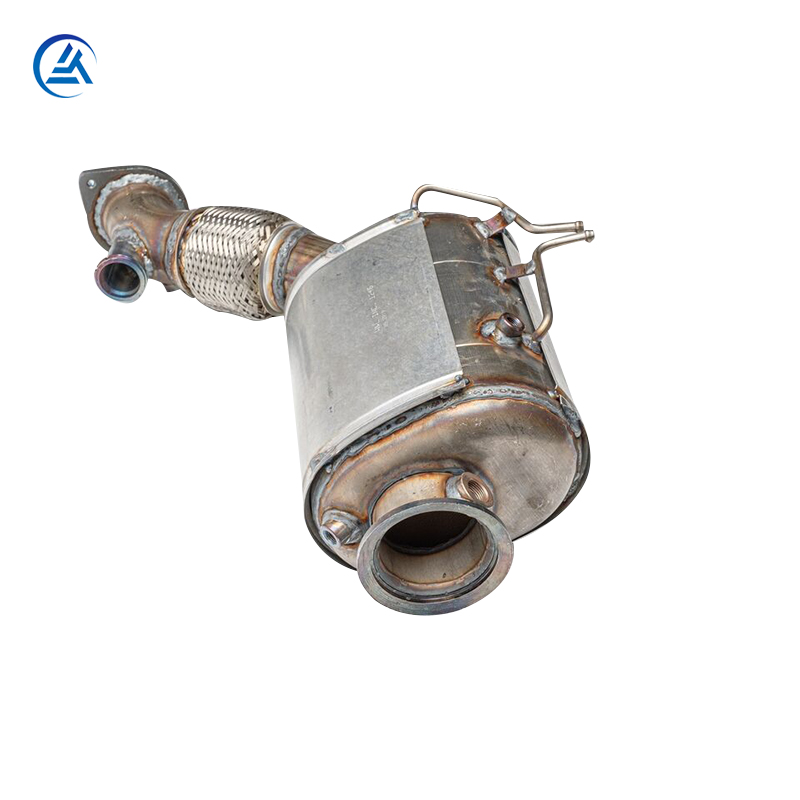
The DPF Unit: Acting as a physical trap, it captures particulate matter and raw soot. It holds these particles until they can be oxidized into harmless gas.
Selective Catalytic Reduction (SCR): Placed downstream, the SCR system handles NOx reduction. It uses diesel exhaust fluid (DEF) to break down nitrogen oxides into harmless nitrogen and water.
A high-performing particulate filter system must carefully balance competing needs. The primary success criteria revolve around maximizing particulate trapping efficiency while simultaneously minimizing exhaust flow restriction. If a filter is too dense, it creates backpressure. If it is too porous, it fails environmental compliance checks.
Table 1: Exhaust Ecosystem Sequence | Component | Primary Function | Impact on Engine Performance |
| DOC | Elevates temperature, oxidizes CO and hydrocarbons. | Enables downstream soot oxidation. |
| DPF | Traps solid soot and ash particles. | Prevents tailpipe emissions; directly affects backpressure. |
| SCR | Reduces NOx emissions using DEF. | Ensures final environmental compliance before exit. |
Core Substrate Technologies: Evaluating Material Trade-Offs
The baseline material you choose dictates the filter's thermal limits, physical weight, and total lifespan. Manufacturers typically categorize solutions into three distinct material grades. Each serves a highly specific operational environment.
Cordierite Filters
Cordierite is a specialized ceramic material that dominates the standard commercial market.
Pros: Cordierite is highly cost-effective to produce. Because of this, you will find it as the standard material in many light-to-medium OEM applications. It offers excellent initial filtration.
Cons: It possesses a noticeably lower melting point. This makes it highly susceptible to catastrophic thermal cracking during runaway active regeneration cycles.
Common Mistake: Fleet operators often ignore minor engine misfires. In a Cordierite system, unburned fuel from a misfire can ignite inside the filter, rapidly exceeding its thermal limits and melting the core.
Silicon Carbide (SiC) Filters
Silicon Carbide acts as a robust upgrade over standard ceramics, built for demanding commercial use.
Pros: SiC delivers exceptional thermal durability. It features a significantly higher melting point than Cordierite. This makes it the ideal choice for heavy-duty, high-heat, and high-soot applications such as refuse trucks or heavy haulers.
Cons: The material is physically heavier. It also carries a substantially higher initial procurement cost. You trade upfront capital for extended thermal resilience.
Sintered Metal Filters
Sintered metal represents the absolute premium tier of substrate technology.
Pros: This material offers the highest possible durability. It easily handles extreme vibration and shock environments found in mining and construction. Furthermore, sintered metal is highly cleanable, allowing for aggressive maintenance without substrate damage.
Cons: Sintered metal occupies a premium pricing bracket. Because of its cost, engineers usually reserve it for highly specialized non-road machinery rather than highway fleets.
Chart: Substrate Thermal Tolerance and Cost Summary | Substrate Material | Thermal Tolerance Range | Initial Cost Bracket | Best Use Case |
| Cordierite | Up to ~1,200°C | Low to Moderate | Light/Medium Duty, Highway |
| Silicon Carbide (SiC) | Up to ~2,400°C | Moderate to High | Heavy Duty, Urban Transit |
| Sintered Metal | Extreme (Vibration resistant) | Premium | Mining, Off-Road Construction |
Regeneration Mechanics: Matching System to Duty Cycle
The leading cause of a failed DPF filter is a fundamental mismatch between the chosen regeneration type and the vehicle's actual duty cycle. Engines must regularly burn off the accumulated soot to maintain exhaust flow. We call this process regeneration.
Understanding the two primary evaluation dimensions—passive and active regeneration—will save you from constant mechanical headaches.
Passive Regeneration
Passive regeneration works seamlessly in the background without driver intervention.
It relies entirely on sustained, high-temperature exhaust flow.
The process typically occurs seamlessly in long-haul, highway applications where engines operate under consistent loads for hours at a time.
Limitation: Passive regeneration is completely ineffective for stop-and-go delivery fleets, urban buses, or high-idle equipment. The exhaust simply never reaches the required temperature naturally, leading to rapid soot plugging.
Active Regeneration
When natural heat is insufficient, the system must force a cleaning cycle.
The system injects raw diesel fuel directly into the exhaust stream or relies on a dedicated burner.
This artificially raises internal temperatures high enough to ignite and oxidize the trapped soot.
Implementation Risk: Active systems inevitably increase overall fuel consumption. More dangerously, if an operator frequently interrupts the cycle (for example, by shutting down the engine mid-regeneration), it risks severe thermal degradation and permanent filter face-plugging.
As a decision lens, fleet managers must relentlessly audit their operational data. You must analyze idle time versus load time before specifying any replacement unit or retrofit solution. Putting a passive system on an urban delivery truck guarantees failure within a matter of weeks.
Maintenance Realities and System Economics
Fleet operators routinely experience implementation risks because they misunderstand the chemistry of combustion. During a successful regeneration cycle, trapped soot burns and turns into invisible gas. However, the metallic additives found in engine oils do not burn. They leave behind an incombustible material known as ash.
Ash permanently stays inside the filter cells. Over thousands of miles, this ash slowly fills the unit, reducing the volume available for soot. Understanding these predictive maintenance indicators helps you avoid roadside breakdowns:
Spikes in differential pressure sensor readings: The engine computer measures pressure before and after the filter. High discrepancies mean the unit is choking.
Increased frequency of active regeneration cycles: If the unit has lost volume due to ash, it fills with soot faster, forcing the system to regenerate more often.
Declining fuel efficiency: Backpressure forces the engine to work harder simply to push exhaust out, directly wasting diesel.
When evaluating cleaning versus replacement economics, you have options. You must regularly evaluate the cost of professional aqueous or pneumatic ash cleaning against the price of exchanging the core for a remanufactured or brand-new unit. Scheduled physical cleaning is highly effective.
Risk Note: Ignoring ash accumulation permanently shrinks the filter's volumetric capacity. Eventually, the densely packed ash will expand under heat, physically cracking and destroying the expensive ceramic substrate inside.
Compliance, Verification, and Shortlisting Logic
Replacing an emissions component requires absolute trust and strict adherence to environmental regulations. Authorities aggressively pursue enforcement. Using uncertified parts or deleting systems can result in substantial fleet fines, impounded vehicles, and severe reputational damage.
EPA and CARB verification serves as your primary shield. Buyers must meticulously verify that the aftermarket or retrofit unit carries the necessary governmental certifications for their specific engine family. A generic filter might fit physically, but if it lacks the correct certification stamp for your exact engine serial number, it remains legally non-compliant.
When comparing OEM versus aftermarket replacements, look beyond the initial price tag. You must systematically assess the details.
Warranty Coverage: Read the fine print regarding thermal damage versus mechanical defect coverage.
Exact-Fit Dimensions: Ensure the replacement aligns perfectly with existing mounting brackets to avoid vibration damage.
Sensor Bung Locations: Incorrectly angled sensor bungs will stress wiring harnesses and trigger false check-engine lights.
For your next-step actions, establish a formal vendor scorecard. Rate your potential suppliers based on proven substrate quality, transparent warranty terms, and the local availability of professional ash cleaning services. A structured approach guarantees you source parts that keep you highly compliant and operationally ready.
Conclusion
The diesel particulate filter is a highly engineered thermal and mechanical trap, not a simple muffler. Treating it as a expected wear item rather than a permanent fixture is the key to successfully managing your long-term maintenance budgets. Remember these core takeaways:
Always match the regeneration profile to the specific duty cycle of your equipment.
Select a substrate material that naturally withstands the thermal demands of your specific applications.
Acknowledge that ash accumulation is inevitable, and schedule routine physical cleanings to prevent substrate cracking.
Prioritize strict EPA and CARB compliance to shield your organization from massive regulatory fines.
We strongly advise procurement and maintenance teams to audit their current emission system health logs immediately. Review your differential pressure data and active regeneration frequencies. Consult with certified heavy-duty aftertreatment specialists to ensure your sizing and replacement strategies keep your machinery running cleanly.
FAQ
Q: What is the average lifespan of a diesel particulate filter dpf?
A: The lifespan varies widely. Typically, it lasts 100,000 to 150,000 miles for highway trucks. For off-road equipment, expect 3,000 to 5,000 hours of runtime. This lifespan heavily depends on strict maintenance schedules, oil quality, and operating within the correct duty cycle.
Q: Can a DPF filter be legally bypassed or "deleted"?
A: No. Tampering with, bypassing, or removing emissions equipment violates the federal Clean Air Act. Doing so incurs severe federal fines, voids manufacturer warranties, and renders the equipment illegal to operate on public roads or compliant job sites.
Q: What is the difference between a DOC and a DPF?
A: A Diesel Oxidation Catalyst (DOC) causes a chemical reaction to reduce carbon monoxide and unburned fuel while generating heat. In contrast, a DPF is a physical filter that traps solid soot and ash particles to prevent them from entering the atmosphere.


