Finding your vehicle’s diesel particulate filter is the first step before inspecting, cleaning, or replacing it. This crucial component plays a central role in reducing harmful emissions from diesel engines, and knowing where it’s positioned can save time, prevent damage, and make maintenance easier. At Shandong Antian New Materials Technology Co., Ltd., a leading manufacturer of automotive exhaust treatment systems, we design and produce high-quality Diesel Particulate Filters (DPFs) to meet strict environmental standards, ensuring drivers can keep their vehicles clean and compliant.
Typical Locations by Vehicle Type
The position of a diesel particulate filter varies depending on the vehicle type, engine layout, and exhaust system design. Understanding these differences will help you locate it quickly and avoid unnecessary disassembly.
Passenger Cars
In most passenger cars, the DPF is located underneath the vehicle, close to the engine or mid-exhaust section. Automakers position it here so it can reach optimal operating temperature quickly, allowing trapped particulates to burn off during regeneration cycles. Often, you’ll find it integrated into the same housing as the catalytic converter, forming part of a combined emissions control unit. In some modern diesel sedans or SUVs, the DPF may be tucked high up near the firewall, making it less exposed to road debris and easier to warm during short trips.
Light Trucks and Vans
For light commercial vehicles, the DPF is generally installed under the chassis, sometimes near the rear axle. The design allows for a larger filter body, which can handle higher soot loads from extended driving or heavier payloads. Because these vehicles are often used for deliveries or utility work, the location is chosen to balance accessibility for maintenance with protection from road hazards. If you operate a small fleet of diesel vans, tracing the exhaust pipe from the engine back toward the middle or rear of the vehicle will usually lead you straight to the DPF.
Heavy Trucks
In heavy-duty trucks, the diesel particulate filter is typically larger and integrated into bigger aftertreatment modules. These modules often include the DPF, selective catalytic reduction (SCR) units, and other emissions components. The assembly may be mounted vertically along the side of the truck or horizontally beneath the frame rails. Because of the significant heat and exhaust volume, heavy truck DPFs are robustly shielded and fitted with multiple temperature and pressure sensors for accurate monitoring.
How to Identify the DPF Visually
Once you know the general area to check, there are clear visual indicators that distinguish a diesel particulate filter from other exhaust components.
Size and Shape Clues
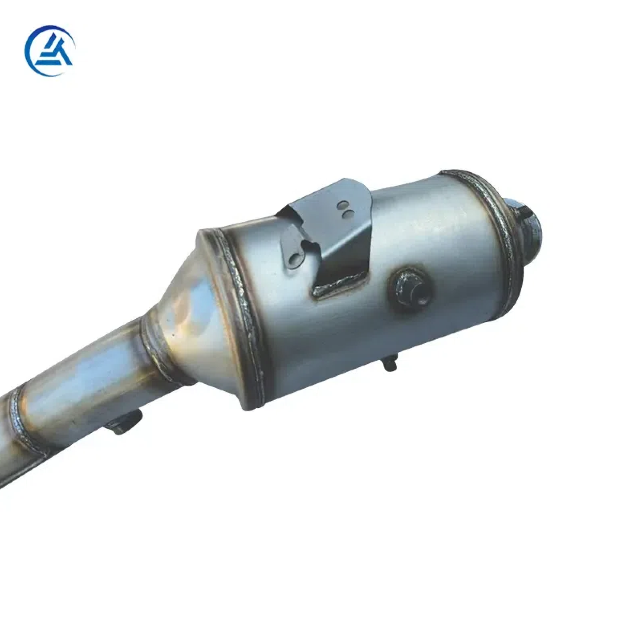
A DPF usually has a cylindrical or slightly oval metallic housing with a honeycomb structure inside. This honeycomb is made from materials such as cordierite or silicon carbide, which trap soot particles as exhaust gases pass through. The exterior often has heat shielding or thermal wraps to maintain temperature during regeneration. Compared to a standard muffler, a DPF will have a more compact, dense body and a rugged industrial look.
Sensors and Connecting Pipes
Look for temperature and pressure sensors connected to the filter housing. These sensors send data to the vehicle’s engine control unit (ECU) to determine when regeneration should occur. Small pipes—often called differential pressure lines—run from the front and rear of the DPF to measure the pressure drop caused by soot buildup. These extra fittings make a DPF easy to distinguish from a catalytic converter or muffler.
Safety and Access Considerations
Before attempting to inspect or remove a diesel particulate filter, safety should be the top priority. These components operate at extremely high temperatures during regeneration and can retain heat for hours.
Cooling Times and Burn Prevention
Always allow the vehicle to cool completely before getting under it. Touching a hot DPF can cause severe burns, and loosening fittings prematurely may release hazardous soot particles into the air. It’s best to wear gloves, protective eyewear, and a mask if you need to be in close proximity to the unit.
Component Removal
In some vehicles, you may need to remove heat shields or other exhaust components to access the DPF. While these shields are essential for protecting nearby parts from heat damage, they can make access more challenging. If you are not confident in your mechanical skills, professional help is recommended. Improper removal can damage sensors, break fittings, or compromise the filter’s sealing surfaces.
Quick Locating Checklist
For those who prefer a step-by-step method, here’s a simple checklist to pinpoint your diesel particulate filter quickly and efficiently.
Step 1: Check the Owner’s Manual
Your vehicle’s manual will usually include diagrams showing exhaust system components, including the DPF location. This is the most straightforward and accurate reference.
Step 2: Visual Inspection
With the car safely lifted and supported, scan underneath the vehicle from the engine back toward the exhaust outlet. Follow the exhaust pipe from the turbocharger or manifold, and look for the distinctive housing and sensor connections described earlier.
Step 3: Use VIN or Workshop Diagrams
If the DPF is still hard to find, many workshop manuals or online parts catalogs will show its exact placement using your vehicle’s VIN. This ensures you’re looking for the right shape, size, and configuration.
Why Proper Location Matters for Maintenance
Knowing exactly where your diesel particulate filter is positioned not only saves time but also prevents costly mistakes. For example, replacing the wrong part or damaging sensors during unrelated repairs can trigger warning lights and lead to unnecessary downtime. Regular visual checks can also help you spot early signs of trouble, such as oil contamination, heat discoloration, or exhaust leaks near the DPF housing.
The Role of a High-Quality Diesel Particulate Filter
A well-designed DPF doesn’t just meet emissions standards—it also maintains optimal engine performance. At Shandong Antian New Materials Technology Co., Ltd., we specialize in producing advanced diesel particulate filters that resist premature blockage, even under demanding conditions. Our manufacturing process ensures each filter offers superior filtration efficiency, reducing soot and ash buildup and extending the intervals between maintenance cycles. This means fewer regeneration issues, lower backpressure on the engine, and consistent fuel economy.
Our experience as one of northern China’s largest automotive exhaust system manufacturers allows us to produce filters that meet the needs of both individual vehicle owners and large fleet operators. Whether your concern is staying compliant with environmental regulations or avoiding downtime due to blocked filters, our DPF solutions are engineered for reliability and long service life.
Conclusion
Locating your diesel particulate filter is the first step in keeping your diesel engine running clean, efficient, and compliant with environmental standards. Understanding where it’s installed and how to identify it can make inspection, cleaning, and replacement far easier. At Shandong Antian New Materials Technology Co., Ltd., we are committed to providing durable, high-performance Diesel Particulate Filters that meet and exceed global standards. For more information about our products or to find the right solution for your vehicle or fleet, contact us today.


